
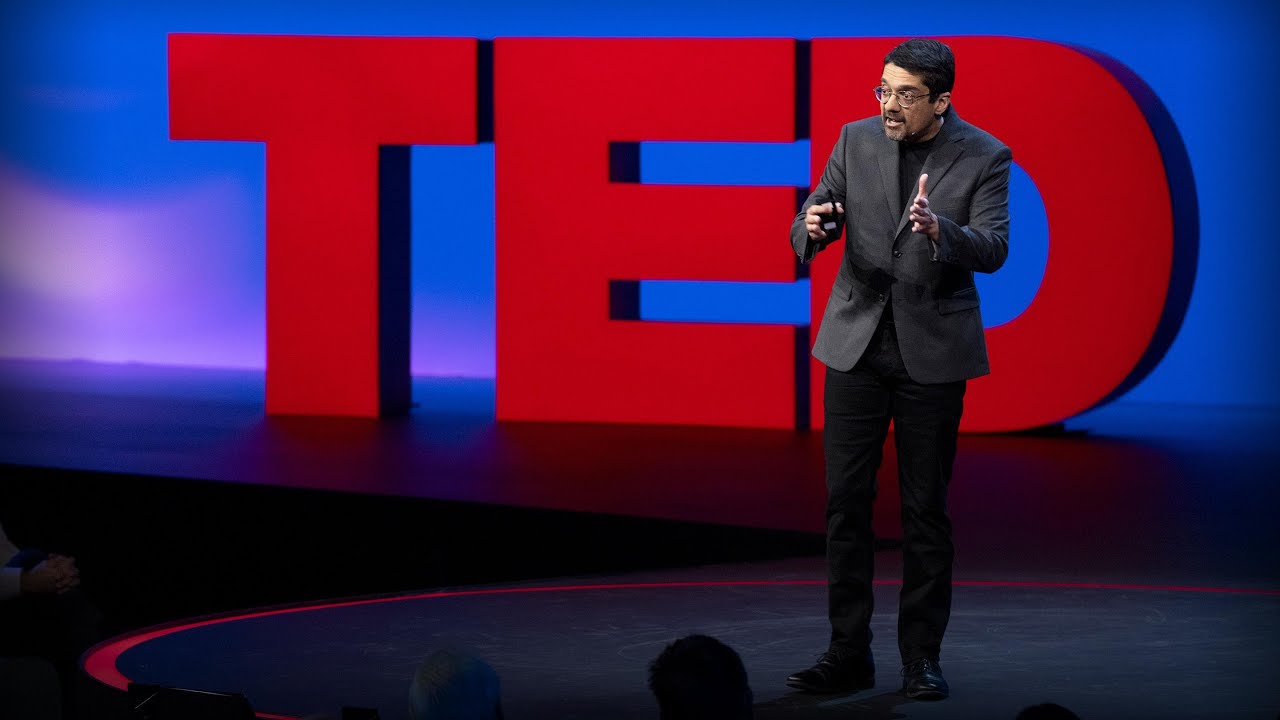

📺 视频信息
Title: You Don’t Actually Know What Your Future Self Wants (你其实不知道未来的自己想要什么)
Speaker: Shankar Vedantam
Accent: American (General American with subtle Indian influence)
Duration: 14:09
🎧 语音现象标注说明 (Legend)
为了让你更直观地看到发音技巧,我使用以下符号进行标注:
| 符号/格式 | 名称 (中/英) | 发音技巧/说明 |
|---|---|---|
| 加粗 (Bold) | 重读单词 (Sentence Stress) |
发音需更响亮、更长。 |
| 斜体 (Italics) | 弱读单词 (Weak forms) |
发音要轻、快,元音常弱化为 /ə/ 。 (通常涉及介词、代词) |
| ‿ | 连读 (Linking) |
前一个词的词尾与后一个词的词头滑过,声音不断开。 |
| (t) / (d) / (p) | 失爆 / 不完全爆破 (Stop sounds) |
只做口型不发声,或停顿一下,不将气流送出。 |
| /d/ | 浊化 (Flap T) |
当字母t 夹在两个元音之间时,发音类似快速的 d。 |
| // | 意群停顿 (Pause) |
在此处稍微换气或做短暂亦停顿。 |
📜 语音现象标注全文 (Annotated Transcript)
(Legend Review: Bold=Stress; Italics =Weak forms; ‿=Link; (t)/(d)=Stop; /d/=Flap T; //=Pause)
When I was 12 years ‿ old, // I fractured my foot (t) playing soccer.
I didn't (t) tell my parents // when I got (t) home that (t) night, // because the next (t) day, // my dad was taking me // to see ‿ a movie.
('years old' s与o连读; 'fractured' ed发音/d/; 'didn't' t失爆; 'got home' t失爆)
A soccer movie. //
I worried that if I told my parents ‿ about the foot, // they would take me // to see ‿ a doctor.
('told my' d失去爆破; 'about the' t失去爆破)
I didn't (t) want ‿ to see ‿ a doctor, // I wanted to see the movie.
('want to' 弱读为 wanna; 'wanted to' t浊化或弱读)
The next (t) morning, // my dad goes, // "It's nice ‿ out. // Why don't (t) we walk (t) to the theater?"
('nice out' s与ou连读; 'walk to' k与t之间失去爆破)
It was ‿ a mile ‿ away. //
As we go, // he says, // "Why are you limping?"
I tell him I have something ‿ in my shoe.
('mile away' l与a连读; 'something in' ng与i连读)
The movie // was spectacular. //
It told the story ‿ of some ‿ of soccer's greatest stars, // great (t) Brazilian players, // I was ‿ exstatic.
('story of' y与o连读; 'greatest' t浊化; 'ecstatic' c/k/与s连续)
At the end ‿ of the movie, // I told my dad ‿ about the foot, // he took me // to see ‿ an orthopedic doctor, // who put (t) my foot (t) in ‿ a cast // for three weeks.
('end of' d与o连读; 'put my' t失爆; 'foot in' t与i连读/d/)
I tell you this story today // because four decades later /d/, // I don't (t) really consider myself // a soccer fan ‿ anymore.
('decades later' s与l之间顺滑连接; 'later' t浊化)
Today my sports fandom // is tuned to ‿ another kind ‿ of football.
('kind of' d与o连读)
Now my 12-year-old self // wouldn't (t) just (t) find this // incomprehensible. //
My 12-year-old self // would see this // as ‿ a betrayal.
('as a' s与a连读)
Now you might say we all change // from the time we're 12. // So let (t) me fast forward ‿ a decade.
('let me' t失爆)
When I was 22, // I was ‿ a freshly minted // electronics ‿ engineer // in Southern India.
('freshly minted' t在此处通常不爆破)
I had (d) no ‿ idea // that three decades later /d/ // I would be living ‿ in the United States, // that I would be ‿ a journalist, // and that I would be the host ‿ of ‿ a podcast // called Hidden Brain.
('living in' ng与i连读; 'host of a' t浊化连读 /hoʊs-tə-və/)
It's ‿ a show ‿ about human behavior // and how to ‿ apply psychological science // to our lives.
('show about' w与a连读)
Now we didn't (t) have podcasts (t) // when I graduated /d/ from college. //
We didn't (t) walk ‿ around // with smartphones ‿ in our pockets (t).
('graduated' d/t 浊化; 'walk around' k与a连读; 'pockets' t失爆)
So my future // was not (t) just (t) unknown, // it was unknowable.
('not just' t失爆; 'it was' t失爆)
All ‿ of us have seen // what (t) this is like // in the last (t) three years // as we slowly try and ‿ emerge // from the Covid pandemic.
('all of us' 连读; 'try and' 连读)
If we think ‿ about the people we used (t) to be // three years ‿ ago // before the pandemic. //
We can see // how we have changed.
('years ago' s与a连读 /zə/)
We can see how // angxiety // and isolation // and ‿ upheavals // in our lives // and livelihoods, // how this has changed us, // changed our ‿ outlook, // changed our perspective.
('our outlook' r与ou连读)
But there is ‿ a paradox ‿ here. //
And the paradox is // when we look backwards, // we can see // inormous changes // in who we have become.
('is a' s与a连读 /zə/; 'paradox here' 这里的 h 可能会被击穿)
But when we look forwards, // we tend (t) to ‿ imagine // that we're going to be // the same people // in the future.
('tend to' d失爆或同化; 'going to' 弱读为 gonna)
Now sure // we ‿ imagine the world // is going to be different. //
We know that A I // and climate change // is going to mean // for ‿ a very different world.
('for a' r与a连读)
But we don't (t) ‿ imagine // that we ourselves // will have different perspectives, // different views, // different preferences // in the future.
I call this // "The Illusion ‿ of Continuity".
('Illusion of' n与o连读)
And I think one reason this happens // is that when we look backwards, // the contrast with our prior selves // to who we are today // is so clear.
We can see ‿ it so clearly // that we have become different people.
When we look forward, // we can ‿ imagine ourselves // being ‿ a little /d/ older, // a little /d/ greyer, // but we don't (t) ‿ imagine fundamentally // that we're going to have // a different ‿ outlook // or a different perspective // that we're going to be // different people.
And so // those changes seem // more ‿ amorphous.
I want ‿ to make the case // to you today // that this ‿ illusion // has profound consequences, // not (t) just (t) for whether we become // soccer players // or podcast hosts, // but for matters /d/ // involving life and death.
Let (t) me ‿ introduce you // to John and Stephanie Rinka.
We did ‿ a story ‿ about them // for Hidden Brain // some years ‿ ago.
This photograph was taken // in 1971 // on their wedding day.
John and Stephanie // had just (t) eloped, // gotten married // at Cambridge City Hall // in Massachusetts.
He was 22, // she was 19.
John told me that // after they got (t) married, // they traveled to different parts ‿ of the country, // they ‿ eventually settled /d/ // in North Carolina.
John became ‿ a high school basketball coach, // Stephanie became ‿ a nurse.
And because they lived // in ‿ a rural part ‿ of the state, // she would often make // house visits // to patients.
Many ‿ of the patients she saw // were very sick.
They had (d) // terminal illnesses, // very low quality /d/ ‿ of life.
And when Stephanie came home // from these visits, // she was often shaken.
And she would tell John, // "John, // if I ever get // a terminal illness, // please do nothing // to prolong my suffering.
I care more ‿ about quality /d/ ‿ of life // than quantity /d/ ‿ of life."
In her more dramatic moments she would say, // "John if I ever get (t) that (t) sick, // just (t) shoot (t) me. // Just (t) shoot (t) me."
And John Rinka // would look lovingly // at his wife, // his healthy wife, // and he would say, // "Okay Steph. // Okay."
Fast forward ‿ a couple ‿ of decades. // In her late 50s /d/, // Stephanie begins // to slur her words.
She goes to see ‿ a doctor // who runs some tests, // and he diagnoses her // with A L S, // Lou Gehrig's disease.
He tells her it's fatal, // it's ‿ incurable, // and he tells her // that ‿ a day is going to come // when she is no longer ‿ able // to breathe // on her own.
Stephanie being Stephanie, // decides to ‿ extract // as much joy and pleasure // from life as she can.
She spends time // with friends and family.
As she gets (t) sicker, // she and John // spend some time // on ‿ a beautiful beach // that they both love.
But there comes ‿ a day // when Stephanie // in fact, // is no longer ‿ able // to breathe. // She's gasping for air.
And John takes her // to the hospital.
And ‿ a nurse at the hospital // asks Stephanie, // "Misses Rinka, // would you like us // to put (t) you // on ‿ a ventilator?"
And Stephanie // says yes.
John is flabbergasted. // They've been having this conversation** // for 30 years. // Surely that's not (t) // what (t) Stephanie wants.
He doesn't (t) say ‿ anything.
The next (t) morning he says "Steph, // when the nurse asked (t) you yesterday // if you wanted to go // on ‿ a ventilator // and you said yes, // is that (t) really // what (t) you want?"
And Stephanie Rinka // said yes.
Now // you might ‿ argue // that if Stephanie // had written out // an ‿ advanced directive... // John without hesitation // would have said, // "Of course she does not (t) want // to go on ‿ a ventilator. // We should try and figure out ‿ a way // to keep her as comfortable as possible // so that she can die // with dignity."
But ‿ of course // this only solves // the legal conundrum. //
It doesn't (t) solve // the ethical problem here, // and the ethical problem // is that Stephanie // at age 39, // as she was healthy, // had (d) no real conception // of what (t) Stephanie // at age 59 // with ‿ a terminal illness // gasping for air // would really want.
For the older Stephanie, // her younger self // might ‿ as well have been // a stranger. //
A stranger who was trying // to make life and death decisions // for her.
Phi losophers have talked (t) // for many years // about ‿ a thought ‿ experiment. // It's sometimes called // the Ship ‿ of Theseus.
The great (t) warrior Theseus // returned from his ‿ exploits, // his ship was stationed // in the harbor // as ‿ a memorial.
And over the decades, // parts ‿ of the ship // began to rot (t) and decay.
And as this happened, // planks were replaced // by new planks, // until ‿ eventually // every part ‿ of the Ship ‿ of Theseus // was built (t) from something new.
And philosophers // starting with Plato // have asked (t) the question: //
"If every part ‿ of the Ship ‿ of Theseus // is new, // is this still // the Ship ‿ of Theseus?"
You and I // are walking ‿ examples // of the Ship ‿ of Theseus.
Our cells turn ‿ over // all the time.
The people you were // 10 years ‿ ago // are not (t) the people // you are today.
Biologically, // you have become // a different person.
But I believe // something much more profound happens // at ‿ a psychological level.
Because you could argue, // a ship is not (t) just (t) // a collection ‿ of planks, // a body is not (t) just (t) // a collection ‿ of cells. // It's the organization // of the planks // that makes the ship.
But at ‿ a psychological level, // each new layer that's put (t) down // is not (t) ‿ identical // to the one // that came before ‿ it.
The famous // plasticity /d/ ‿ of the brain // that we've all heard so much ‿ about // means that // on ‿ an ongoing basis, // you are constantly becoming // a new person.
This has profound consequences // for so many different // aspects (t) ‿ of our lives.
When we make promises // to other people, // when we promise to love someone // till death do us part, // we are making ‿ a promise // that ‿ a stranger // is going to have to keep.
Our future selves // might not (t) share // our views, // our perspectives, // our hopes.
When we lock people up // and throw ‿ away the key, // it's not (t) just (t) // that the people we ‿ imprison // are going to be different // in 30 years // from now.
We are going to be different // 30 years // from now.
Our need // for retribution, // for vengeance, // might not (t) be // what (t) it is today.
When we pass laws... // let's bear in mind // that ‿ among the people // who might disagree with us // are our own // future selves.
I have three pieces ‿ of ‿ advice // on how to wrestle // with this wicked problem.
The first (t) piece ‿ of ‿ advice I have // is stay curious.
You should play // an active role // crafting the person // you are going to become.
You should be // the curator // of your future self.
Spend time // with people // who are not (t) just (t) // your friends and family.
Spend time // on ‿ avocations // and professional pursuits // that are not (t) just (t) // what (t) you do // regularly.
Second... // practice // hjumility.
Let's remember to add // a touch ‿ of // hjumility.
And three, // be brave.
Your future self // will look back at you // in 20 or 30 years, // will look back // not (t) with // rezentment // or bewilderment, // but will look back at you // and say, // "Thank you."
💡 高级词汇与地道表达 (Vocabulary & Expressions)
| 词汇/表达 | 词性 & 音标 | 释义 (English definition) |
例句 & 搭配 |
|---|---|---|---|
| Amorphous | [adj.] /əˈmɔːr.fəs/ | having no clear shape or form; vague | Example: The changes in our personality seem more amorphous than physical changes. 搭配: amorphous mass; amorphous concept. |
| Profound | [adj.] /prəˈfaʊnd/ | felt or experienced very strongly; extreme | Example: This illusion has profound consequences for our lives. |
| Elope | [v.] /iˈloʊp/ | to leave home secretly in order to get married without permission | Example: John and Stephanie eloped and got married at City Hall. |
| Terminal illness | [n.] /ˌtɜːr.mə.nəl ˈɪl.nəs/ | an illness that cannot be cured and will lead to death | Example: She was diagnosed with a terminal illness and given months to live. |
| Conundrum | [n.] /kəˈnʌn.drəm/ | a problem that is difficult to deal with | Example: This only solves the legal conundrum, not the ethical one. 搭配: ethical conundrum; solve a conundrum. |
| Advance directive | [n.] /ədˌvæns dɪˈrek.tɪv/ | a legal document stating a person's wishes regarding medical treatment | Example: Even if she had an advance directive, her feelings might change. |
| Retribution | [n.] /ˌret.rɪˈbjuː.ʃən/ | deserved and severe punishment | Example: Our need for retribution might fade over time. |
| Unconscionable | [adj.] /ʌnˈkɑːn.ʃən.ə.bəl/ | morally unacceptable | Example: Some old laws now seem unconscionable to us. |
| Curator | [n.] /kjʊˈreɪ.t̬ɚ/ | a person in charge of selecting and organizing things | Example: You should be the curator of your future self. |
| Avocation | [n.] /ˌæv.oʊˈkeɪ.ʃən/ | a hobby or minor occupation | Example: Spend time on avocations outside your regular job. |
| Bewilderment | [n.] /bɪˈwɪl.dɚ.mənt/ | a feeling of being perplexed and confused | Example: Your future self might look back with bewilderment at your choices. |
| Ship of Theseus | [Phrase] | a thought experiment about identity and change | Example: We are walking examples of the Ship of Theseus paradox. |
🗣️ 练习建议 (Tips)
- Storytelling Tone (故事感) : Shankar 在讲述 Stephanie 和 John 的故事时(03:21 - 06:08),语速放慢,充满了情感色彩 (emotional resonance) 。特别是在模仿 John 说 "Okay Steph, Okay" 时,语气是温柔且带有安抚性质的。而在模仿医生宣布病情时,语气则变得严肃沉重。练习时请注意这种情感语调的转换。
- Rhetorical Questions (修辞问句) : 演讲中包含大量反问句,例如 "Is this still the Ship of Theseus?" 或 "Is that really what you want?" 。读这些句子时,句尾语调上扬 ⤴️,并要注意停顿,留给听众思考的时间。
- Flap T (T的浊化) : 美音中非常显著的特点。注意单词如 later, better, stationed, greatest, water 以及短语 put it, write it 中的 T 发音。在这个演讲中,Shankar 的 later /leɪdər/ 和 matter /mædər/ 发音非常典型,可以让你的口语听起来更流畅地道。
- Concept Stress (概念重读) : 当提到核心概念如 "The Illusion of Continuity" (连续性错觉) 或 "Ship of Theseus" (忒修斯之船) 时,一定要放慢语速,每一个重读音节都要饱满,确保听众抓住了关键词。