.jpg)

📺 视频信息
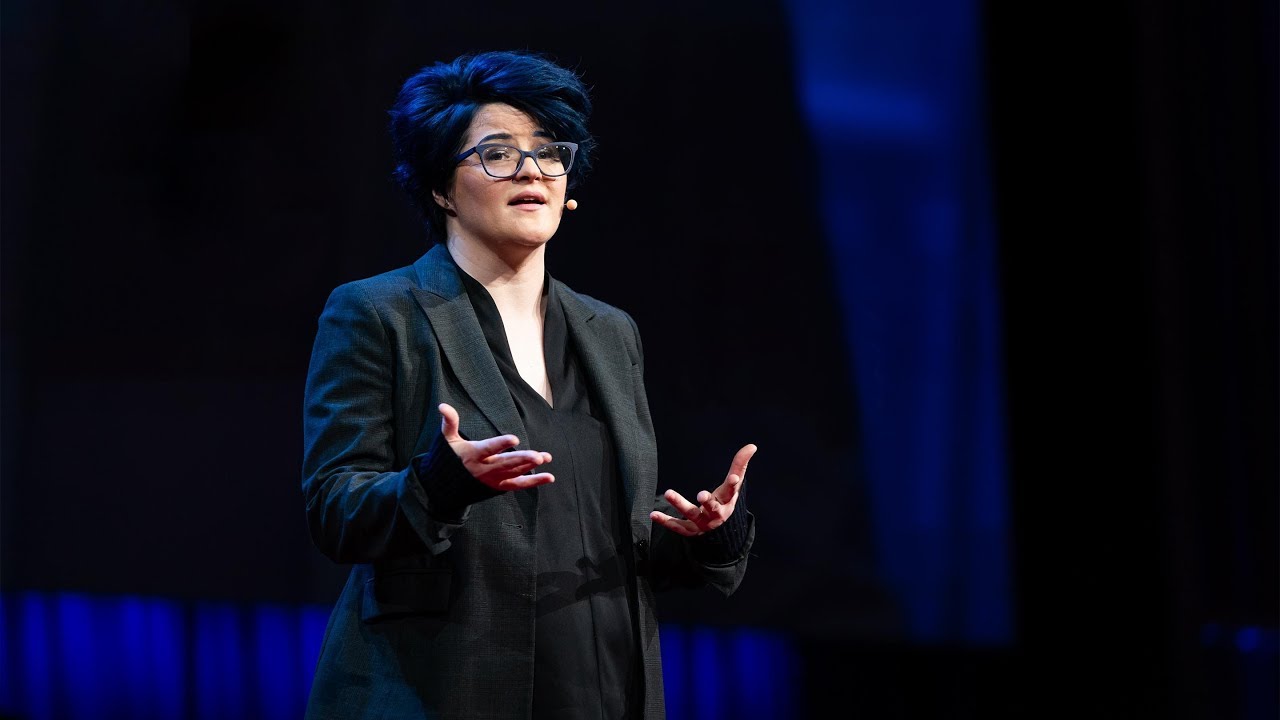
Title: You are fluent in this language (and don't even know it)
Speaker: Christoph Niemann
Accent: German-accented English (International English)
Duration: 12:41
🎧 语音现象标注说明 (Legend)
为了让你更直观地看到发音技巧,我使用以下符号进行标注:
| 符号/格式 | 名称 (中/英) | 发音技巧/说明 |
|---|---|---|
| 加粗 (Bold) | 重读单词 (Sentence Stress) |
发音需更响亮、更长。 |
| 斜体 (Italics) | 弱读单词 (Weak forms) |
发音要轻、快,元音常弱化为**/ə/**。 (通常涉及介词、代词) |
| ‿ | 连读 (Linking) |
前一个词的词尾与后一个词的词头滑过,声音不断开。 |
| (t) / (d) / (p) | 失爆 / 不完全爆破 (Stop sounds) |
只做口型不发声,或停顿一下,不将气流送出。 |
| /d/ | 浊化 (Flap T) |
当字母t夹在两个元音之间时,发音类似快速的 d。 |
| // | 意群停顿 (Pause) |
在此处稍微换气或做短暂亦停顿。 |
📜 语音现象标注全文 (Annotated Transcript)
(Legend Review: Bold=Stress; Italics**=Weak forms; ‿=Link; (t)/(d)=Stop; /d/=Flap T; //=Pause)**
I'm ‿ an artist.
Being ‿ an artist // is the greatest job there is.
And I really pity // each ‿ and every one ‿ of you // who has to spend their days // discovering new galaxies // or saving humanity // from global warming.
But being ‿ an artist // is also ‿ a daunting job.
I spend every day // from nine to six // doing this.
I even started ‿ a side career // that consists ‿ intirely // of complaining // about the difficul(t)y // of the creative process.
But today, // I don't want ‿ to talk ‿ about // what makes my life difficult, // I want ‿ to talk ‿ about // what makes ‿ it easy.
And that is you.
And the fact // that you are fluent // in ‿ a language // that you're probably // not even ‿ aware ‿ of.
You're fluent // in the language // of reading images.
Deciphering ‿ an image like that // takes quite ‿ a bit ‿ of ‿ an ‿ in(t)ellectual effort, // but nobo(d)y ever taught you // how this works.
You just know ‿ it.
College, // shopping, // music.
What makes ‿ a language powerful // is that you can take // a very complex ‿ idea // and communi(c)ate ‿ it // in ‿ a very simple // efficient form.
These images // re(p)resent ‿ exactly // the same ‿ ideas.
But when you look ‿ for ‿ example // at the college hat, // you know // that this does not re(p)resent // the ‿ accessory you wear ‿ on your head // when you're being handed your diploma, // but rather // the whole ‿ idea // of college.
Now, // what drawings can do // is they can not only // communi(c)ate images, // they can even // evoke ‿ emotions.
Let's say // you get to ‿ an ‿ unfamiliar place // and you see this.
You feel happiness // and relief.
Or, // a slight sense ‿ of ‿ unease // or maybe // downright panic.
Or, // blissful // peace ‿ and quiet.
But visuals, // they are ‿ of course more // than just graphic icons.
You know, // if I want ‿ to tell the story // of modern day struggle, // I would start // with the armrest // between two airplane seats, // and two sets ‿ of elbows // fighting.
And what I love there // is this ‿ universal law, // that, you know, // you have thirty seconds // to fight ‿ it out, // and once it's yours, // you get ‿ to keep ‿ it // for the rest ‿ of the flight.
Now, // commercial flight // is full ‿ of these images.
If I want ‿ to illus(t)rate // the ‿ idea ‿ of discomfort, // there's nothing better // than these neck pillows.
You know, // they're designed // to make you more comfor(t)able, // except // they don't.
Um, // so I never sleep // on airplanes.
What I do ‿ occasionally // is I fall ‿ into // a sort ‿ of painful coma.
And when I wake up ‿ from that, // I have // the most terrible taste // in my mouth.
It's... it's ‿ a taste // that's so bad // it cannot be described // with words, // but it can be drawn.
The thing is, // you know, // I love sleeping.
And when I sleep, // I really prefer ‿ to do ‿ it // while spooning.
I've been spooning // on almost ‿ a pro level // for close to twenty years, // but in all this time, // I've never figured out // what to do // with that bottom arm.
And // the only thing // that makes sleeping // even more compli(c)a(t)ed // than trying ‿ to do ‿ it ‿ on ‿ an airplane // is when you have small children.
They show up ‿ at your bed // at ‿ around four A M, // with some bogus ‿ excuse // of "I had ‿ a bad dream"... // and then, // of course you feel sorry ‿ for them, // they're kids, // so you let them into your bed.
And I have to ‿ admit, // at the beginning // they're really cute // and warm // and snuggly.
The minute // you fall back ‿ asleep, // they // in‿explicably // start rota(t)ing.
We like to call this // the heli(c)op(t)er mode.
Now, // the deeper // something is edged // into your consciousness, // the fewer details we need // to have ‿ an ‿ emotional reaction.
So, // why does ‿ an image like this work?
It works // because we // as readers // are ‿ incredibly good // at filling ‿ in the blanks.
Now when you draw, // there's this concept // of nega(t)ive space.
And the ‿ idea is // that ‿ instead ‿ of drawing // the actual object, // you draw // the space ‿ around ‿ it.
So the bowls // in this drawing // are empty.
But the black ink // prompts your brain // to project food // into ‿ a void.
What we see here // is not ‿ an owl flying.
What we actually see // is a pair ‿ of double A batte(r)ies // standing ‿ on ‿ a nonsensi(c)al drawing, // and I ani(m)ate the scene // by moving my desk lamp // up ‿ and down.
The image // really only ‿ exists // in your mind.
So, // how much ‿ information // do we need // to trigger such ‿ an image?
My goal // as ‿ an artist // is to use // the smallest ‿ amount possible.
I try to ‿ achieve // a level ‿ of simplici(t)y // where // if you were to take ‿ away // one more ele(m)ent, // the whole concept // would just collapse.
And that's why my personal favo(r)ite tool // as ‿ an artist // is abstraction.
I've come up // with this system // which I call // the Abstrac(t)-o-meter, // and this is how ‿ it works.
So you take // a symbol, // any symbol, // for ‿ example // the heart ‿ and the arrow, // which most ‿ of us // would read ‿ as ‿ a symbol for love.
And I'm ‿ an artist, // so I can draw this // in any given degree // of realism // or abstraction.
Now, // if I go // too realis(t)ic ‿ on ‿ it, // it just grosses // every(b)o(d)y out.
If I go // too far ‿ on the other side // and do... very abstract, // nobo(d)y has // any ‿ idea // what they're looking ‿ at.
So I have to find // the perfect place // on that scale // and in this case // it's somewhere // in the middle.
Now, // once we have reduced ‿ an image // to ‿ a more simple form, // all sorts ‿ of new connections // become possible.
And that ‿ allows // for totally new angles // in storytelling.
And so what I like ‿ to do // is I like ‿ to take images // from really remote cultural areas // and bring them together.
Now with more daring refe(r)ences, // I can have more fun, // but ‿ of course I know // that eventually // things become so ‿ obscure // that I start losing some ‿ of you.
So as ‿ a designer, // it's absolutely key // to have ‿ a good ‿ understanding // of the visual // and cultural vocabu(l)ary // of your audience.
With this image here, // a comment ‿ on the ‿ Olympics // in Athens, // I ‿ assumed // that ‿ a reader ‿ of the New Yorker // would have some // ru(d)imenta(r)y ‿ idea // of Greek art.
If you don't, // the image does not work.
But if you do, // you might even ‿ appreciate // a small detail // like the beer can pattern here // on the bottom ‿ of the vase.
A recurring discussion // I have // with maga(z)ine edi(t)ors, // who are usually word people, // is // that their audience... // you... // are much better // at making radi(c)al leaps // with images // than they're being given credit for.
And the only thing I find frustra(t)ing // is that they often seem ‿ to push me // towards ‿ a small set // of really tired // visual clichés // that are considered safe.
You know, like, // it's the... // the businessman // climbing up ‿ a ladder, // and then the ladder moves, // and morphs ‿ into ‿ a stock market graph, // and anything with dollar signs. // That's always good.
If there are // e(d)itorial decision makers here // in the audience, // I want ‿ to give you // a piece ‿ of ‿ advice.
Every time // a drawing like this is published, // a baby panda // will die. // Lite(r)ally.
Now, // when is ‿ a visual cliché // good or bad?
It's ‿ a fine line.
And it really depends ‿ on the story.
So, // in two thousand ‿ eleven, // during the earthquake // and the tsunami // in Japan, // I was thinking ‿ for... // of ‿ a cover.
And I went through // the classic symbols: // the Japanese flag, // the Great Wave // by Hokusai... // one ‿ of the greatest drawings ever.
And then, // the story changed // when the si(t)uation // at the power plant // in Fukushima // got out ‿ of hand.
And // I remember these T V images // of the... the workers // in hazmat suits // just walking through the site, // and what struck me // was how quiet // and serene it was.
And so I wanted ‿ to create ‿ an image // of ‿ a silent // catastro(p)he.
And that's the image // I came up with.
What I want ‿ to do // is create // an ‿ aha moment // for you, // for the reader.
And ‿ unfortunately // that does not mean // that I have ‿ an ‿ aha moment // when I create these images.
I never sit ‿ at my desk // with the // proverbial light bulb // going off // in my head.
What it takes // is actually // a very slow, // unsexy process // of mini(m)al design decisions // that then, // when I'm lucky, // lead to ‿ a good ‿ idea.
So one day, // I'm ‿ on ‿ a train // and I'm trying ‿ to decode // the graphic rules // for drops // on ‿ a window.
And eventually I realize, // "Oh, // it's the background // blurry, // upside down, // contained // in ‿ a sharp image."
And I thought, // "Wow, that's really cool," // and I have absolutely no ‿ idea // what to do with that.
A while back... uh, later, // I'm... I'm back // in New York // and I draw this image // of being stuck // on the Brooklyn Bridge // in... in ‿ a traffic jam.
And it's... really ‿ annoying // but also kind ‿ of poetic.
And only later I realized, // "Oh, // I can take both ‿ of these ‿ ideas // and put them together // in this ‿ idea."
And what I want ‿ to do // is not show // a realis(t)ic scene.
But // maybe like poetry, // make you ‿ aware // that you // alrea(d)y had this image with you, // but only now // I've ‿ unearthed ‿ it // and made you realize // that you // were carrying ‿ it with you // all ‿ along.
But like poetry, // this is ‿ a very deli(c)ate process // that... uh... // is neither // efficient // nor scalable, // I think.
And maybe // the most ‿ important skill // for ‿ an artist // is really empathy.
You you need // craft, // and you need... uh... // you need cre‿ativity... // uh, thank you... // to... to come up // with ‿ an image like that.
But then // you need ‿ to step back // and look ‿ at what you've done // from the perspective // of the reader.
I've tried ‿ to become // a better artist // by becoming // a better ‿ observer // of images.
And for that // I started ‿ an exercise // for my self // which I call Sunday Sketching.
Which meant, // on ‿ a Sunday, // I would... take... // take ‿ a random object // I found ‿ around the house, // and... try ‿ to see // if that object // could trigger ‿ an ‿ idea // that had nothing ‿ to do // with the ‿ original purpose // of that item.
And // it usually just means // I blank // for ‿ a long while.
And the only trick // that eventually works // is if I open my mind, // and run through // every image // I have stored // up there // and see // if something clicks.
And if it does, // just add ‿ a few lines ‿ of ink // to connect... // this... or... to preserve // this very short moment // of ‿ inspiration.
And the great lesson there // was // that the real magic // doesn't happen // on paper.
It happens // in the mind // of the viewer.
When // your ‿ expectations // and your knowledge // clash // with my ‿ artistic ‿ intentions.
Your ‿ in(t)eraction // with ‿ an image. // You know... // your ‿ abili(t)y // to read, // kinda question, // be bothered // or bored // or ‿ inspired // by ‿ an image // is as ‿ important // as my ‿ artistic contribution.
Because // that's what turns... // you know... // an ‿ artistic statement // really // into ‿ a creative dialogue.
And so your skill // at reading images // is not only ‿ amazing, // it is // what makes my art possible.
And for that, // I thank you very much.
💡 高级词汇与地道表达 (Vocabulary & Expressions)
| 词汇/表达 | 词性 & 音标 | 释义 (English definition) | 例句 & 搭配 |
|---|---|---|---|
| Obscure | [adj.] /əbˈskjʊr/ | 晦涩的,难解的 not known to many people; difficult to understand |
*Ex:*The reference was tooobscurefor most people to catch. **搭配:**obscure meaning; obscure reference |
| Cliché | [n.] /kliːˈʃeɪ/ | 陈词滥调 a phrase or opinion that is overused and betrays a lack of original thought |
*Ex:*The "businessman on a ladder" is a tired visualcliché. **搭配:**visual cliché; avoid clichés |
| Rudimentary | [adj.] /ˌruː.dɪˈmen.tər.i/ | 基本的,初步的 basic; elementary; relating to an immature, undeveloped, or basic form |
*Ex:*I have arudimentaryknowledge of Greek art. **搭配:**rudimentary understanding; rudimentary skills |
| Serene | [adj.] /səˈriːn/ | 宁静的,安详的 calm, peaceful, and untroubled; tranquil |
*Ex:*The scene at the power plant was strangelyserene. **搭配:**serene smile; serene landscape |
| Hazmat suit | [n.] /ˈhæz.mæt ˌsuːt/ | 防化服 (Hazardous Materials suit) a garment worn as protection against hazardous materials |
*Ex:*Workers inhazmat suitswalked through the site. **搭配:**don a hazmat suit; protective hazmat gear |
| Proverbial | [adj.] /prəˈvɝː.bi.əl/ | 众所周知的,谚语的 well known, especially so as to be stereotypical |
*Ex:*I don't have theproverbiallight bulb going off over my head. **搭配:**the proverbial needle in a haystack |
| Unsexy | [adj.] /ʌnˈsek.si/ | 枯燥的,乏味的 (Informal) dull; not exciting or glamorous |
*Ex:*Creativity is often a slow,unsexyprocess. **搭配:**unsexy work; unsexy details |
| Empathy | [n.] /ˈem.pə.θi/ | 共情,同理心 the ability to understand and share the feelings of another |
*Ex:*The most important skill for an artist isempathy. **搭配:**show empathy; have empathy for |
| Scalable | [adj.] /ˈskeɪ.lə.bəl/ | 可扩展的 able to be changed in size or scale; used here to mean "easily repeated for mass production" |
*Ex:*This poetic process is neither efficient norscalable. **搭配:**scalable business model; scalable solution |
🗣️ 练习建议 (Tips)
- German Accent Nuances (德国口音细微差别):
- Christoph Niemann 的英语非常流利,但作为德国人,他的部分发音比较“硬”。
- Stop Sounds (t/d): 注意他在单词结尾的 t 或 d,有时会比美式英语更清晰甚至轻微爆破(例如 art, craft, mind),而不是像美音那样完全失去爆破或弱化。
- Vowels: 注意 process 这个词,英美音发音不同(/ˈproʊ.ses/ vs /ˈprɒ.ses/),他有时会介于两者之间。
- Rhythm & Humor (节奏与幽默感):
- 演讲中有很多幽默的段子(例如 baby panda 的梗)。练习时要特别注意他的停顿 (Pauses)。
- 他在讲笑话前的停顿是为了制造悬念,笑话后的停顿是给观众反应时间。模仿这种节奏能让你的口语更有表现力。
- Key Idea Stress (核心观点重读):
- 在结尾,他强调了观众的重要性 (It happens in the mind of the viewer)。练习时,要学会用重读和放慢语速来突出这些核心金句,让听众感受到这句话的分量。