
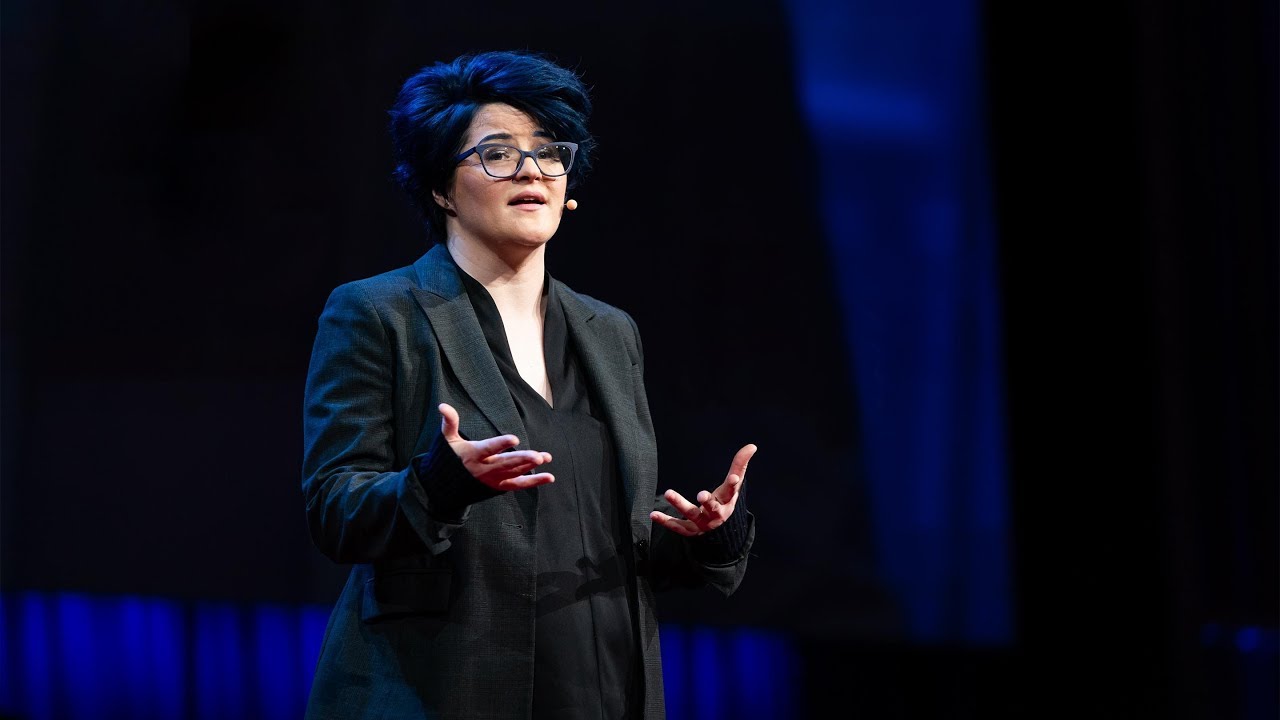

📺 视频信息
Title: The truth about unwanted arousal (非自愿性唤起的真相)
Speaker: Emily Nagoski
Accent: General American
Duration: 15:16
🎧 语音现象标注说明 (Legend)
为了让你更直观地看到发音技巧,我使用以下符号进行标注:
| 符号/格式 | 名称 (中/英) | 发音技巧/说明 |
|---|---|---|
| 加粗 (Bold) | 重读单词 (Sentence Stress) |
发音需更响亮、更长。 |
| 斜体 (Italics) | 弱读单词 (Weak forms) |
发音要轻、快,元音常弱化为**/ə/**。 (通常涉及介词、代词) |
| ‿ | 连读 (Linking) |
前一个词的词尾与后一个词的词头滑过,声音不断开。 |
| (t) / (d) / (p) | 失爆 / 不完全爆破 (Stop sounds) |
只做口型不发声,或停顿一下,不将气流送出。 |
| /d/ | 浊化 (Flap T) |
当字母t夹在两个元音之间时,发音类似快速的 d。 |
| // | 意群停顿 (Pause) |
在此处稍微换气或做短暂停顿。 |
📜 语音现象标注全文 (Annotated Transcript)
I have // the best job ‿ in the world.
I'm ‿ a sex educator.
(I'm a m和a连读)
And that means // that every day // I get ‿ to teach women // how to live // with confidence // and joy // inside their bodies.
(inside their d不完全爆破)
And every day // I get ‿ to answer // their questions ‿ about sex.
And by far // the number one question // I get // is, // "Am I normal?"
(Am I m和I连读)
Does ‿ it take ‿ me too long ‿ to get ‿ aroused?
(get aroused t浊化为/d/并连读)
Why don't I want ‿ it // as much ‿ as he does?
(want it t和i连读; much as ch和a连读)
Is ‿ it OK // if I fantasize ‿ about this?
(Is it s和i连读)
Now, // these are important questions.
(important t不完全爆破)
People suffer // tremendously // when they worry // that they might be broken.
So I love // that I get ‿ to give them // the good news: // You are normal.
And here is why.
But then // there is this other question.
It's a question // that people ask // only ‿ after they've made sure // that I'm safe ‿ to talk ‿ to.
(ask only k和o连读; talk to k不完全爆破)
It starts ‿ a little // differently.
They don't look ‿ at me.
(look at k和a连读)
They look down // or away.
And they say // "something happened ‿ to me."
(happened to d失去爆破)
Maybe // it was ‿ a long time ‿ ago.
(time ago m和a连读)
Maybe // it was recent.
Maybe // it was by ‿ a stranger // or a parent // or a partner.
But during ‿ it // my body reacted.
(during it ng和i连读)
I got wet.
Or I had ‿ an erection.
(had an d和a连读)
Or I had ‿ an orgasm.
Does that mean // I wanted ‿ it?
(wanted it 连读)
Does that mean // I liked ‿ it?
(liked it k和i连读)
Does that mean // it wasn't really ‿ abuse?
No.
Today // I am going ‿ to tell ‿ you // why that happens.
(going to 弱读为 gonna)
It's a physiological phenomenon // called // arousal non-concordance.
And to understand ‿ it, // you have ‿ to understand // three things // about how // the brain processes // sexual response.
One: // Sexual response // is ‿ a dual control model.
Two: // How // arousal actually works.
And three: // What sexual context is.
(context is t和i连读)
So, // First: // The Dual Control Model.
In the late nineties // at the Kinsey Institute // Erick Janssen // and John Bancroft // started wondering.
Up ‿ until then // scientists thought // that sexual response // was ‿ a linear process.
(was a s和a连读)
The more sexual stimuli // you give someone, // the more ‿ aroused // they get.
Sort ‿ of // like ‿ a thermometer.
(sort of t浊化)
So // if someone had // a sexual problem, // it must be // because // they weren't getting // enough stimulation.
But Janssen // and Bancroft noticed // that there are lots ‿ of guys // who are in situations // with plenty ‿ of stimulation, // but they don't get ‿ an erection.
(don't get t失去爆破)
Or they lose their ‿ erection.
So they realized // that there must be // a nother mechanism // in the brain // that was inhibiting** // sexual response.
So they came ‿ up // with the Dual Control Model.
(came up m和u连读)
Which says // that our sexual response // is the product // of a balance // between two systems // in the brain.
One system // is the sexual excitation system.
It's the sexual accelerator.
It notices // all the sex-related information // in the environment.
Everything that you see // and hear // and smell // and touch // and taste.
And everything you think // and believe // and imagine.
And it sends a signal // that says // "turn on".
The other system // is the sexual inhibition system.
It's the sexual brake.
And it notices // all the very good reasons // not to be ‿ aroused // right now.
(not to t失去爆破)
Like, // is that ‿ a polar bear?
Or, // what time is it?
Or, // I'm worried ‿ about // getting pregnant.
(worried about d和a连读)
And it sends ‿ a signal // that says // "turn off".
(sends a z和a连读)
So, // the process ‿ of getting ‿ aroused // is dual.
It's not just // the process ‿ of stepping // on the accelerator, // but also // the process ‿ of taking // your foot // off the brake.
(off the v和th同化)
Ok, // Number Two: // How does // genital ‿ arousal // actually work?
For a long time, // researchers measured // men's ‿ arousal // with a device // that measured // the circumference // of the erection.
But to measure // women's ‿ arousal // was more difficult.
Until recently, // the standard tool // was called // a vaginal photoplethysmograph.
(plethysmograph 这里的th发音注意)
Which is a clear // acrylic probe, // shaped // a little ‿ a bit // like ‿ a tampon, // with a light source // and a light detector // inside.
And you place ‿ it // in the vagina, // and the light // illuminates // the capillaries // of the vaginal wall.
And as // blood flows // into the genitals, // the color // of the vaginal wall // gets darker, // which makes // less light // bounce back // to the detector.
So basically // it measures // how much blood // is in the vagina.
So, // scientists bring people // into the lab.
And they place // the device // into their genitals.
And then // they show them // short video clips.
Some ‿ of the videos // are very sexual.
And some ‿ of the videos // are not sexual // at all.
And while the people // are watching the videos, // they ask them: // "How turned on // do you feel?"
(turned on d和o连读)
And then // they compare // the subjective ‿ experience // of being turned on // with the physiological // genital response.
And here is what they find.
For men, // there is ‿ a high degree // of concordance.
That means, // when their penis is erect, // they say, // "I feel turned on."
And when their penis // is not ‿ erect, // they say, // "I don't feel turned on."
(don't feel t失去爆破)
The subjective // and the physiological // match.
But for women, // there is ‿ a low degree // of concordance.
That means, // that what is happening // in their genitals // may not match // what is happening // in their mind.
You can show ‿ a woman // videos // of bonobos having sex.
And her genitals // will show // a sexual response.
But she will tell ‿ you, // "No, // I'm not into monkeys."
(not into t浊化)
It turns ‿ out, // that the genitals // can respond // even to sexual stimuli // that the person // finds repulsive.
Or terrifying.
Why?
Why would the body do that?
Well, // it's like this.
If you see // a delicious chocolate cake, // your mouth // waters.
If you see // a poisonous // rotted // apple, // guess what?
Your mouth // also waters.
(mouth also th和a连读)
Not because // you want ‿ to eat ‿ it.
But because // your body // is preparing // to vomit.
Either way, // your body is trying // to make the experience // safer // for you.
And that is true // for genital response // too.
The vagina // lubricates // to prepare // for penetration.
Not because // you want ‿ it.
But because // if penetration // occurs, // lubrication // prevents injury.
It is simply // a reflex.
Like // shivering // when you're cold.
Or blinking // when something // flies ‿ at your eye.
(flies at z和a连读)
It does not mean // you want ‿ it.
It just means // your body // is trying // to protect ‿ you.
This // is called // arousal non-concordance.
And it is completely normal.
In fact, // it is the norm // for women.
But because // most people // don't know ‿ about this, // when a victim // of sexual ‿ assault // experiences // physical ‿ arousal, // they often feel // deep shame.
They think, // "My body // betrayed me."
Or "Deep down, // I must have wanted ‿ it."
(must have t失去爆破)
But listen ‿ to me.
Your body // did not // betray you.
Your body // was trying // to protect ‿ you.
Arousal // is not // consent.
(not consent t失去爆破)
Arousal // is not // desire.
Genital response // is just // a reflex.
What matters // is context.
And this // brings ‿ us // to number three.
Context.
Context // is everything // that happens // around // the sensation.
Is ‿ it safe?
Is ‿ it loving?
Is ‿ it respectful?
If the context // is bad, // even if the sensation // is intense, // the experience // will be traumatic.
But if the context // is good, // then the sensation // can be pleasurable.
So, // to go back // to those questions.
Am I normal?
Yes.
If you take // a long time // to get ‿ aroused, // you are normal.
If your body reacted // during // an unwanted experience, // you are normal.
We need // to stop judging // our bodies // based ‿ on // what they do.
And start // listening // to what they need.
So next time // you wonder // if you're normal, // remember // the dual control model.
Remember // non-concordance.
And be kind // to your body.
It is doing // the best it can.
Thank ‿ you.
💡 高级词汇与地道表达 (Vocabulary & Expressions)
| 词汇/表达 | 词性 & 音标 | 释义 (English definition) |
例句 & 搭配 |
|---|---|---|---|
| Non-concordance | [n.] /ˌnɒn.kənˈkɔːr.dəns/ | The state of not matching or agreeing. In this context, when physical signs do not match mental state. | *Example:*Arousalnon-concordanceis common in women. **搭配:**arousal non-concordance; degree of non-concordance. |
| Lubricate | [v.] /ˈluː.brɪ.keɪt/ | To make something smooth or slippery; (of the body) to produce a substance to reduce friction. | *Example:*The eyelubricatesitself to wash away dust. **搭配:**lubricate machinery; vaginal lubrication. |
| Physiological | [adj.] /ˌfɪz.i.əˈlɑː.dʒɪ.kəl/ | Relating to the way in which a living organism or bodily part functions. | *Example:*Fear causes aphysiologicalresponse like sweating. **搭配:**physiological reaction; physiological phenomenon. |
| Genitals | [n.] /ˈdʒen.ə.təlz/ | A person or animal's external organs of reproduction. | *Example:*The doctor examined the patient'sgenitals. **搭配:**external genitals. |
| Repulsive | [adj.] /rɪˈpʌl.sɪv/ | Arousing intense distaste or disgust. | *Example:*She found the smell absolutelyrepulsive. **搭配:**find something repulsive; repulsive behavior. |
| Stimuli | [n.] /ˈstɪm.jʊ.laɪ/ | (Plural of stimulus) Things that rouse activity or energy in someone or something. | *Example:*Visualstimulican trigger memories. **搭配:**respond to stimuli; external stimuli. |
| Inhibit | [v.] /ɪnˈhɪb.ɪt/ | To hinder, restrain, or prevent (an action or process). | *Example:*Anxiety caninhibitperformance. **搭配:**inhibit growth; inhibit sexual response. |
| Concordance | [n.] /kənˈkɔːr.duns/ | Agreement or consistency. | *Example:*There is a lack ofconcordancebetween the two reports. |
| Acryllic | [adj./n.] /əˈkrɪl.ɪk/ | (Here) Made of a clear plastic material. | *Example:*The probe is made of clearacrylic. |
| Dual Control Model | [Phrase] | A theory stating sexual response involves both excitation (gas) and inhibition (brakes). | *Example:*TheDual Control Modelexplains why stress kills libido. |
🗣️ 练习建议 (Tips)
- Sentence Stress (句子重音): 演讲者 Emily Nagoski 使用了非常清晰的重读强调来传递情感。注意她在讲 You are normal 和 Your body did not betray you 时的坚定语气。练习时,请务必把加粗的词读得更重、更慢,以模仿这种肯定和安慰的口吻。
- Terminology (专业术语发音): 视频中出现了一些较长的科学词汇,如 Physiological (/ˌfɪz.i.əˈlɑː.dʒɪ.kəl/) 和 Non-concordance (/ˌnɒn.kənˈkɔːr.dəns/)。建议先拆分音节慢读 (Phy-si-o-lo-gi-cal),再逐渐加速。
- Flap T (浊化 T): 注意美式发音中的浊化现象。例如 genital 中的 t 夹在元音中间,发音接近轻快的 /d/;water 也是如此。
- Empathy in Tone (共情语调): 这个演讲不仅是科普,更是心理疗愈。在模仿 Part 3 时,尝试放慢语速,降低音调,用一种温和、包容的声音朗读,体会演讲者对听众(特别是受害者)的关怀。

.jpg)