
📺 视频信息
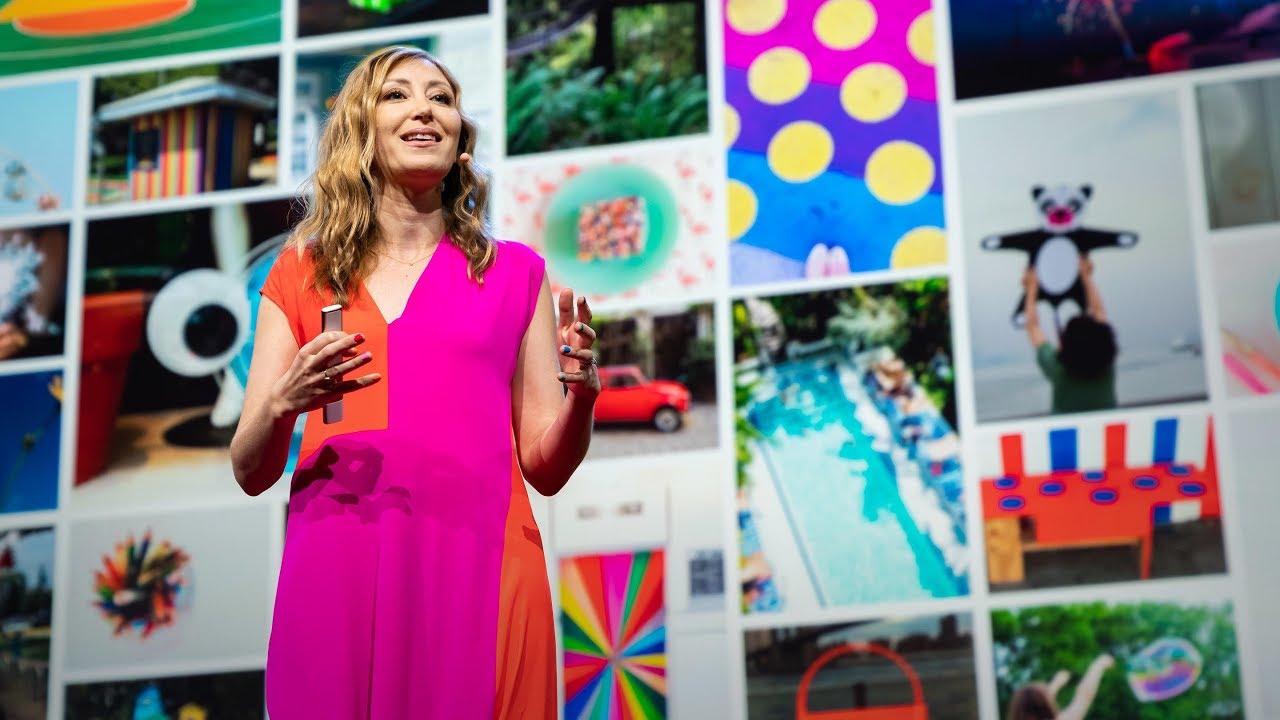
Title: Where Joy Hides and How to Find It (喜悦藏身何处以及如何寻找)
Speaker: Ingrid Fetell Lee
Accent: General American
Duration: 13:38
🎧 语音现象标注说明 (Legend)
为了让你更直观地看到发音技巧,我使用以下符号进行标注:
| 符号/格式 | 名称 (中/英) | 发音技巧/说明 |
|---|---|---|
| 加粗 (Bold) | 重读单词 (Sentence Stress) |
发音需更响亮、更长。 |
| 斜体 (Italics) | 弱读单词 (Weak forms) |
发音要轻、快,元音常弱化为 /ə/ 。 (通常涉及介词、代词) |
| ‿ | 连读 (Linking) |
前一个词的词尾与后一个词的词头滑过,声音不断开。 |
| (t) / (d) / (p) | 失爆 / 不完全爆破 (Stop sounds) |
只做口型不发声,或停顿一下,不将气流送出。 |
| /d/ | 浊化 (Flap T) |
当字母t 夹在两个元音之间时,发音类似快速的 d。 |
| // | 意群停顿 (Pause) |
在此处稍微换气或做短暂亦停顿。 |
📜 语音现象标注全文 (Annotated Transcript)
(Legend Review: Bold=Stress; Italics =Weak forms; ‿=Link; (t)/(d)=Stop; /d/=Flap T; //=Pause)
It's two thousand ‿ eight // and I'm just finishing // my first year // of design school.
And I'm at my first year-end review, // which is ‿ a form ‿ of ritual torture // for design students // where they make you take everything you made // over the course ‿ of the year // and lay ‿ it out // on ‿ a table // and stand next ‿ to it // while ‿ a bunch ‿ of professors, // most ‿ of whom you've never seen before, // give you their unfiltered ‿ opinions ‿ of ‿ it.
(bunch of: ch与o连读; opinions of it: 这里的of weak form,连读很明显)
So it's my turn // and I'm standing next ‿ to my table, // everything neatly lined ‿ up, // and I'm just hoping // that my professors can see // how much effort I've put // into making my designs // practical, // and ergonomic, // and sustainable.
(lined up: d与u连读; put into: t失爆)
And I'm starting ‿ to get really nervous // because for ‿ a long time // no ‿ one says anything. // It's just completely silent.
And then // one ‿ of the professors // starts ‿ to speak // and he says, // "Your work // gives me ‿ a feeling ‿ of joy."
(no one: 元音/oʊ/与/w/连读; gives me: v与m同化,语速快时v可能会轻读)
Joy?
I wanted ‿ to be ‿ a designer // because I wanted ‿ to solve real problems.
Joy is nice, // I guess, // but it's kind ‿ of light. // Not substantial.
(kind of: d与of连读,f弱读为v; Not substantial: t失爆)
But I was also kind ‿ of intrigued // because joy // is this intangible feeling. // And how does that // come from the stuff // on the table next ‿ to me?
I asked the professors, // "How do things // make us feel joy? // How do tangible things // make us feel // intangible joy?"
They hemmed // and hawed // and gestured ‿ a lot // with their hands.
"They just do," // they said.
(asked the: k与th之间失爆,t不发音; make us: k与u连读)
I packed ‿ up my things for the summer // but I couldn't stop thinking // about this question.
And this launched ‿ a journey, // one that I didn't know ‿ at the time // would take me ten years // to ‿ understand the relationship // between the physical world // and the mysterious, // quixotic // emotion we call joy.
(packed up: k与u连读; stop thinking: p失爆)
And what I discovered // is that not only are they linked, // but that the physical world // can be ‿ a powerful resource to us // in creating happier, // healthier lives.
(not only: t失爆; linked but: d失爆)
After my review, // I thought, // "I know what joy feels ‿ like, // but what is ‿ it // exactly?"
And I found // that even scientists // don't always ‿ agree // and they sometimes use the words joy // and happiness // and positivity, // more ‿ or less // interchangeably.
(don't always: t失爆; more or less: r与o连读)
But broadly speaking, // when psychologists use the word joy, // what they mean // is an intense, // momentary ‿ experience // of positive ‿ emotion. // One that makes us smile // and laugh // and feel ‿ like we want ‿ to jump ‿ up ‿ and down.
(momentary experience: y与e连读; jump up and down: 连读非常紧密)
And this is actually ‿ a technical thing. // That feeling // of wanting ‿ to jump ‿ up ‿ and down // is one ‿ of the ways // that scientists // measure joy.
It's different than happiness, // which measures // how good we feel // over time.
Joy // is about feeling good // in the moment, // right now.
(good we: d失爆)
And this was interesting ‿ to me // because as ‿ a culture // we are obsessed // with the pursuit ‿ of happiness. // And yet // in the process, // we kind ‿ of // overlook joy.
(kind of: d弱化与of连读)
So // this got me thinking. // Where does joy come from?
I started asking // everyone I knew // and even people I just met // on the street // about the things that brought them joy.
// "Hi, // nice ‿ to meet you. // What brings you joy?"
(got me: t失爆)
I felt ‿ like ‿ a detective. // I was like, // "When did you last see ‿ it? // Who were you with? // What color was ‿ it? // Did anyone else see ‿ it?"
I was the Nancy Drew // of joy.
And after ‿ a few months ‿ of this, // I noticed // that there were certain things // that started ‿ to come ‿ up // again // and again // and again.
They were things like // cherry blossoms, // and bubbles. // Swimming pools, // and tree houses. // Hot air balloons, // and googly eyes. // And ice cream cones, // especially the ones // with the sprinkles.
(come up: m与u连读; hot air: t与air连读,t浊化为/d/)
These things // seemed ‿ to cut ‿ across lines // of age, // and gender, // and ethnicity.
I mean, // if you think ‿ about ‿ it, // we all stop // and turn our heads // to the sky // when the multicolored arc ‿ of ‿ a rainbow // streeks ‿ across ‿ it.
(cut across: t浊化; think about it: 连读 very smooth)
And fireworks. // We don't even need ‿ to know // what they're for, // and we feel // like we're celebrating too.
(need to: d失爆/同化)
These things // aren't joyful for just ‿ a few people. // They're joyful // for nearly everyone. // They're // universally joyful.
And seeing them all together, // it gave me this // indescribably hopeful feeling.
The sharply divided, // politically polarized world we live ‿ in, // sometimes has the ‿ effect // of making our differences // feel so vast // as to be // insurmountable.
And yet // underneath ‿ it all, // there's ‿ a part ‿ of each ‿ of us // that finds joy // in the same things.
(underneath it all: 连读; each of us: 连读)
And though we're offen told // that these // are just passing pleasures, // in fact, // they're really ‿ important // because they remind ‿ us // of the shared humanity // we find // in our common ‿ experience // of the physical world.
(really important: y与i连读)
But I still needed ‿ to know, // What is ‿ it // about these things // that makes them so joyful?
I had pictures ‿ of them // up on my studio wall. // And every day I would come ‿ in // and try ‿ to make sense ‿ of ‿ it.
(sense of it: 连读)
And then // one day, // something just clicked.
I saw // all these patterns:
Round things.
Pops ‿ of bright color.
Symmetrical shapes.
A sense ‿ of ‿ abundance // and multiplicity.
A feeling // of lightness // or ‿ elevation.
(pops of: s与o连读; sense of abundance: 连读)
When I saw ‿ it this way, // I realized // that though the feeling ‿ of joy // is mysterious // and ‿ elusive, // we can access ‿ it // through tangible, // physical attributes.
Or what designers call // Aesthetics.
A word // that comes from the same root // as the Greek word // aisthanamai, // which means // "I feel, // I sense, // I perceive."
And since these patterns // were telling me // that joy // begins // with the senses, // I began calling them // Aesthetics ‿ of Joy. // The sensations ‿ of joy.
For ‿ example, // take the aesthetic ‿ of ‿ abundance.
Why do things // like confetti, // and sprinkles, // and ball pits // give us joy?
Well, // if you look ‿ at this // through the lens ‿ of evolution, // abundance signals safety // and survival.
It means // there's enough // for us ‿ to thrive.
(look at this: k与a连读, t与th之间失去爆破)
Or take the aesthetic ‿ of harmony, // which we see // in symmetry // and balance.
It makes sense // that this would give us joy // because in nature // symmetry signals health // in an animal // or ‿ a plant.
(signals health: s与h自然过渡)
And perhaps // the clearest ‿ example ‿ of this // is the aesthetic ‿ of energy.
Vibrant color // and bright light.
The drive ‿ for joy // is the drive ‿ to ward life.
(drive toward: v与t之间e不发音; toward life: d失爆)
But if this is true, // then why // do we have // so many places // that look ‿ like this?
// (Shows image of a grey, brutalist office building) //
Why do we build offices, // and schools, // and hospitals // that look ‿ like this?
Why does the world // look ‿ like this?
We all started ‿ out // joyful.
But as we get older, // being colorful // or ‿ exuberant // opens us up // to judgment.
Adults // who are truly joyful // are often seen // as childish, // or too feminine, // or unserious.
And so we hold back our joy, // and we end ‿ up // in ‿ a world // that looks ‿ like this.
(end up: d与u连读)
But it doesn't have ‿ to be this way.
Look ‿ at the work // of the politician // Edi Rama.
In the late nineties, // he became the mayor ‿ of Tirana, // Albania.
At the time, // Tirana // had ‿ the lowest buds get // per capita // in all ‿ of Europe.
Crime rates were high, // and corruption // was rampant.
(lowest budget: t失爆; all of Europe: l与o连读)
Rama // wasn't ‿ a politician. // He was ‿ an artist.
And with no money // to do public works projects, // he decided // to do the only thing he could.
He painted the buildings.
Bright, // vibrant // colors.
He said, // "When colors came ‿ out // everywhere, // a mood ‿ of change // started ‿ to transform the spirit ‿ of the people."
People stopped // littering // in the streets.
They started ‿ to pay their taxes.
Shopkeepers // removed the metal grates // from their windows // because they felt // safer.
(mood of change: d与of连读; spirit of the people: t浊化)
Five years // after he started, // crime rates // had fallen // by fifty percent.
It wasn't just paint.
It was proof // that joy // isn't just ‿ a superfluous extra.
It's directly connected // to our fundamental // instinct // for survival.
(just a: t与a连读)
On the deepest level, // the drive ‿ for joy // is the drive ‿ to ward life.
And scientists // are starting ‿ to find // that joy // has ‿ a profound ‿ effect // on our bodies.
It reduces stress. // It lowers our risk // of cardiovascular disease.
(profound effect: d与e连读)
So when we think ‿ about // designing schools, // or hospitals, // joy // shouldn't be ‿ an afterthought.
Look ‿ at the Sandy Hook // Elementary School.
After the tragedy, // they wanted ‿ to rebuild a school // that was safe, // but they didn't want ‿ it // to look ‿ like ‿ a fortress.
(didn't want it: t弱化/失爆, t与i连读)
They filled ‿ it // with curves, // and color, // and light.
They used the aesthetics ‿ of joy // to help the children // feel safe // and loved.
We often think // that joy // is distracting.
But actually, // joy // makes us more productive, // more creative, // and more ‿ open // to other people.
(more open: r与o连读)
So my wish // for all ‿ of you // is that you stop // overlooking joy.
Don't wait // for it to find you.
Go ‿ out // and find ‿ it.
Look // for the bright spots. // Look // for the tiny moments.
Because joy // is hiding // in plain sight.
Thank you.
💡 高级词汇与地道表达 (Vocabulary & Expressions)
| 词汇/表达 | 词性 & 音标 | 释义 (English definition) |
例句 & 搭配 |
|---|---|---|---|
| Ergonomic | [adj.] /ˌɜː.ɡəˈnɑː.mɪk/ | designed to minimize physical effort and discomfort, and therefore maximize efficiency | Example: I wanted my designs to be practical and ergonomic. 搭配: ergonomic design; ergonomic chair |
| Quixotic | [adj.] /kwɪkˈsɑː.tɪk/ | extremely idealistic; unrealistic and impractical | Example: It felt like a quixotic quest to understand joy. 搭配: quixotic idea; quixotic campaign |
| Intangible | [adj.] /ɪnˈtæn.dʒə.bəl/ | unable to be touched or grasped; not having physical presence | Example: How do tangible objects create intangible joy? 搭配: intangible assets; intangible feeling |
| Insurmountable | [adj.] /ˌɪn.sɚˈmaʊn.tə.bəl/ | too great to be overcome | Example: Our differences can sometimes feel insurmountable. 搭配: insurmountable odds; insurmountable problem |
| Aesthetic | [n./adj.] /esˈθet.ɪk/ | a set of principles concerned with the nature and appreciation of beauty | Example: The aesthetics of joy include bright colors and round shapes. 搭配: aesthetic appeal; pure aesthetic |
| Abundance | [n.] /əˈbʌn.dən(t)s/ | a very large quantity of something | Example: The aesthetic of abundance signals safety to our brain. 搭配: abundance of food; live in abundance |
| Rampant | [adj.] /ˈræm.pənt/ | (especially of something unwelcome) flourishing or spreading unchecked | Example: Corruption was rampant in the city before the changes. 搭配: rampant inflation; rampant corruption |
| Superfluous | [adj.] /suːˈpɝː.flu.əs/ | unnecessary, especially through being more than enough | Example: Joy isn't just a superfluous extra; it's essential. 搭配: superfluous details; superfluous words |
| Resilience | [n.] /rɪˈzɪl.jəns/ | the capacity to recover quickly from difficulties; toughness | Example: Joy gives us the resilience to face hard times. 搭配: build resilience; emotional resilience |
| In plain sight | [idiom] | in a place where people can clearly see it | Example: Joy is often hiding in plain sight. 搭配: hidden in plain sight |
🗣️ 练习建议 (Tips)
-
Warmth & Intonation (情感与语调):
Ingrid 的演讲风格非常温暖且富有感染力。她在描述 joyful things(如 confetti, bubbles)时,音调会自然上扬,语速稍快,带有笑意;而在讲到 brutalist architecture 或 serious adults 时,语调会下沉,语速变慢,展示出一种对比。练习时,请模仿这种情绪的起伏。 -
The "List" Intonation (排比句语调):
演讲中多次出现排比列举,例如 "schools, hospitals, and offices"。- 规则: 前面的项语调上扬 (Rising Tone ↗),最后一项语调下降 (Falling Tone ↘)。
- Example: schools (↗), and hospitals (↗), that look like this (↘).
-
Visual Descriptions (画面感):
当她说 "Round things", "Pops of bright color" 时,她在试图通过声音构建画面。尝试在朗读这些短语时,把每一个词都读得饱满清晰 (Enunciate clearly),特别是辅音结尾 (k, p, t),让听众仿佛能看到这些物体。 -
Linking "of" (弱读 of):
在这个演讲中,"aesthetic of..." 结构出现了非常多次。注意 of 的发音通常弱化为 /əv/ 甚至 /ə/ ,并且与前面的词连读。- Practice: Aes-the-ti-c‿of (c与o连读) -> /es-ˈθe-tɪ-kəv/。