
📺 视频信息
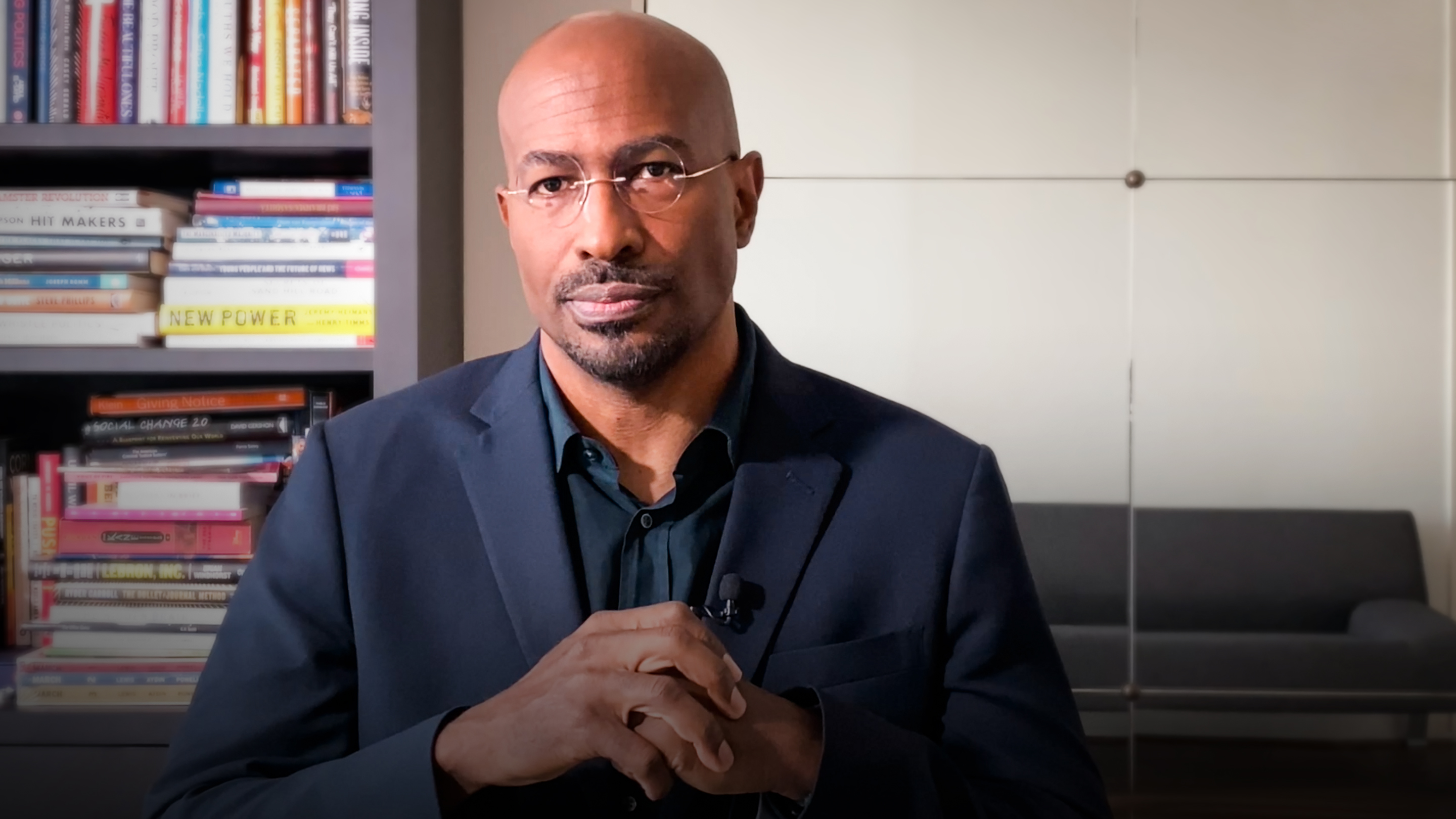
- Title: What if a US presidential candidate refuses to concede after an election?
(如果美国总统候选人拒绝承认败选会怎样?) - Speaker: Van Jones
- Accent: General American
(通用美式英语)
🎧 语音现象标注说明 (Legend)
- 加粗 (Bold):重读单词(Sentence Stress),发音需更响亮、更长。
- 斜体 (Italics):弱读单词(Weak forms),通常是介词、代词,发音轻快,元音弱化。
- ‿:连读(Linking),前一个词词尾与后一个词词头滑过。
- (t) / (d):失爆/不完全爆破(Stop sounds),只做口型不发声,或停顿一下。
- /d/:浊化(Flap T),t 在两个元音之间发音类似快速的 d。
- //:意群停顿(Pause),在此处稍微换气。
📜 语音现象标注全文 (Annotated Transcript - Excerpt)
Okay, // as an ‿ attorney, // as ‿ a political commentator, // and frankly, // as ‿ a former White House ‿ official, // I used ‿ to think // I knew ‿ a lot // about how ‿ America picks ‿ a president.
I was wrong.
I did not know.
(did not t 失爆)
And this year // I've been doing some research // into some ‿ of the... // the fine print // and all of the different things // in our ‿ Constitution // that we never talk ‿ about.
And I have discovered // some legal loopholes // that shocked me, // I guarantee // will shock you, // and could determine // the way that the presidential ‿ election // in twenty-twenty // turns ‿ out.
(turns out s 与 out 连读为 z-out)
For ‿ instance, // did you know // that under our Constitution // a presidential candidate // could actually lose the popular vote, // fail ‿ to get ‿ a majority // in the ‿ Electoral College, // refuse ‿ to concede, // manipulate hidden mechanisms // in our government // and still get sworn ‿ in // as the President // of the United States ‿ of ‿ America?
(States of s 与 of 连读; of America v 与 A 连读)
That's ‿ a true fact.
I know it sounds // like some crazy // House ‿ of Cards ‿ episode.
And I wish it was, // cause then we could just change the channel.
But I just described ‿ to you // a real-world, // real-life possibility // that could ‿ occur this year, // the year I'm talking // in twenty-twenty, // or in some other year, // if we don't fix // some ‿ of these glitches // in our system.
So if you think though, // that the ‿ American people's choice // in ‿ a U S presidential ‿ election // should actually be sworn ‿ in // to become President // of the United States, // please pay ‿ attention // to this talk.
I'm gonna teach you // how to stop ‿ a coup.
(stop a p 与 a 连读)
Okay, // now // where to begin.
All right, // how ‿ about this.
It turns ‿ out // that one ‿ of the main safeguards // of U S democracy // is not in the Constitution // at all.
(not in t /d/ 浊化并连读)
It's not in the law // at all.
It's actually just ‿ a little tradition.
It's ‿ a little custom.
And yet, // this one voluntary gesture // is one ‿ of the main reasons // that you almost never have riots // and bloodshed // and strife // after ‿ a U S ‿ election.
What I'm talking ‿ about // is the Concession Speech.
Okay, // it's ‿ ironic.
It's the one speech // no presidential candidate // ever wants ‿ to give.
And yet, // it is that public ‿ address // that is most ‿ important // for the health // and the well-being // of our nation.
It's that speech, // you know, // when ‿ a presidential contender gives ‿ it... // it's after the ‿ advisors come // and the media tells them, // "Look, // you're not gonna get ‿ enough votes // to be able to hit // that magic number // of two hundred ‿ and seventy // electoral college votes."
You're just not gonna get there.
At that moment, // you don't think ‿ about this.
But the fate // of the ‿ entire Republic // is in the hands // of ‿ a single politician // and their willingness // to walk ‿ out there // and stand ‿ in front ‿ of their family // and stand ‿ in front ‿ of the cameras // and stand ‿ in front ‿ of the whole nation // and say: // "I am conceding the race. // Voluntarily."
"Thank you to my supporters. // The other person has won now. // Congratulations ‿ to them. // Let's ‿ unite behind them. // Let's move on. // Let's be one country. // God bless ‿ America."
You've seen ‿ it // a thousand times.
Make no mistake.
This is ‿ a remarkable tradition // in our country.
Because at that moment, // that candidate // still has ‿ at her command // a nationwide army // of campaign ‿ activists, // of die-hard partisans, // tens ‿ of thousands ‿ of people.
They could just ‿ as easily // take ‿ up arms, // take ‿ to the streets, // they could do // whatever they wanted to.
But that concession speech // instantly // demobilizes // all ‿ of them.
It says, // "Hey, guys, // stand down. // Folks, // it's over."
Moreover // that concession speech // helps the tens ‿ of millions ‿ of people // who voted for that person // to ‿ accept the outcome.
Acknowledge the winner, // however begrudgingly, // and then just // get ‿ up the next morning, // go to work, // go to school, // maybe disappointed, // but not disloyal // to ‿ America's government.
And even more ‿ importantly, // that concession speech // has ‿ a technical function // in that it kind ‿ of ‿ allows // all the other steps // that our Constitution requires // after the voting... // to just move ‿ ahead // on automatic pilot.
Because after the concession speech, // every subsequent step... // to either re-instate the president // or elevate ‿ a new president // just happens // on ‿ a rubber stamp basis.
(rubber stamp s 与 b 连读)
But we sometimes forget: // Candidates // do not have ‿ to concede.
(have to 弱读为 haf-ta)
There's nothing // that makes them concede.
It's just ‿ a norm // in ‿ a year // in which // nothing is normal.
So, // what ‿ if ‿ a losing candidate // simply refused ‿ to concede?
Well, // what could happen // might terrify you.
I think it should.
To give you the background, // think ‿ about ‿ a presidential ‿ election // as ‿ a baseball game.
But could you ‿ imagine ‿ a different world // in which in baseball // there were actually // thirteen innings // or fourteen innings, // not just nine?
But we just had ‿ a weird tradition.
If you're behind // in the ninth ‿ inning, // you just come ‿ out // and concede.
So all those other innings // don't matter.
(don't matter t 失爆)
That's really // how the presidential ‿ elections // work ‿ in ‿ America.
Because the Constitution // actually spells ‿ out // two different sets ‿ of innings.
You got the popular ‿ election process // that everybody pays ‿ attention to, // and then // you've got the ‿ elite selection process // that everybody // essentially ‿ ignores.
In ‿ a close ‿ election, // if nobody concedes, // this second // invisible process... // these extra innings if you will... // they actually matter // a whole lot.
The Constitution requires // this whole other set ‿ of innings.
This is all // behind closed doors.
It's ‿ among government ‿ officials.
And this process goes // from the end ‿ of the vote counting // in November // through December // all the way // into January.
Even in two thousand, // Vice President Al Gore // gave ‿ up // as soon ‿ as the Supreme Court // ordered ‿ an end // to the vote counting.
Gore // did not continue the fight // into the state legislatures, // into the ‿ Electoral College, // into Congress.
As soon ‿ as the court said // "The vote count is done," // he just conceded.
Cause that's // what we do.
Until maybe // twenty-twenty.
So what could happen ‿ instead?
Instead ‿ of conceding, // a losing candidate // could launch // a ferocious fight // to grab power // anyway.
They could file // dozens ‿ of lawsuits // attempting to block // the counting // of millions ‿ of mail-in ballots, // saying they should all be thrown ‿ out, // they're all fraudulent.
(thrown out n与out连读)
Then, // they could demand // that the states // refuse ‿ to certify the ‿ election.
Or, // the loser's party // could send // a rival slate ‿ of ‿ electors // to the ‿ Electoral College // or to Congress // and say: // "No, // we're the real ‿ electors."
Any ‿ of this stuff // could create // such ‿ a mess // in the ‿ Electoral College // and the Congress // that the whole matter // just winds ‿ up // in front ‿ of the House ‿ of Representatives // for the first time // since the eighteen hundreds.
Now, // here's where it gets // totally crazy.
If the presidential ‿ election // winds ‿ up // in the Congress, // in the House ‿ of Representatives, // they don't have ‿ to pay // any ‿ attention at all // to the popular vote // or the ‿ electoral vote.
It's like the ‿ election // never happened.
And then it gets // even crazier.
The final tally // in the House // is taken // not by delegate, // but by delegation.
(not by t失爆)
In other words, // individual Congress people // don't get ‿ to vote.
It's done // by states.
One state, // one vote.
So there's ‿ a possibility // that the Republicans // in the House ‿ of Representatives // could just // anoint // their candidate // to be president, // even without the popular vote // or a majority // in the ‿ Electoral College.
That could happen.
Some people would call that ‿ outcome // a perfectly legal, // perfectly constitutional // coup.
So, // what can you do ‿ about ‿ it?
There's basically // three things // that matter.
Number one: // Get // informed.
A number ‿ of progressive ‿ organizations // are already working hard // to warn ‿ Americans // about this growing threat.
You gotta get // informed.
Number two: // You gotta get // loud.
In ‿ a situation like this, // these days, // everybody // is ‿ a media channel.
You // are the media.
Use your own voice.
And when you do, // my ‿ advice? // Speak // to universal ‿ American values, // not the partisan stuff.
The notion // that the majority // should rule // in ‿ America... // that's ‿ an ‿ American value.
And lastly, // voting is not ‿ enough.
You're gonna have ‿ to get // active.
If it gets ‿ to the point // where you feel // that you have ‿ to take ‿ it to the streets, // please // do ‿ it // peacefully.
Studies have shown // that it's the peaceful protests // that are more successful // at challenging // these would-be dictators // and reversing coup ‿ attempts.
When the protests turn violent, // all that chaos // and carnage, // it actually // chases ‿ away supporters.
Never forget this.
In the long sweep // of human history, // a democratic Republic // is the rarest form // of government // on earth.
Democracies // are fragile.
Democracies // can fail.
And what citizens do, // or fail ‿ to do // in ‿ a moment ‿ of crisis // can determine // the final fate // of government // of, // by, // and for the people.
💡 高级词汇与地道表达 (Vocabulary & Expressions)
| 词汇/表达 | 词性 & 音标 | 释义 (English definition) |
例句 & 搭配 |
|---|---|---|---|
| Concede | [v.] /kənˈsiːd/ | to admit that you have lost in a competition | *Ex:*The candidate refused toconcedethe election. **搭配:**concede defeat; concede the race. |
| Loophole | [n.] /ˈluːp.hoʊl/ | a small mistake in an agreement or law that gives someone the chance to avoid having to do something | *Ex:*He found a legalloopholeto stay in power. **搭配:**tax loophole; legal loophole. |
| Glitch | [n.] /ɡlɪtʃ/ | a sudden, usually temporary malfunction or irregularity of equipment | *Ex:*There were some technicalglitchesin the system. **搭配:**system glitch; minor glitch. |
| Coup | [n.] /kuː/ | a sudden, violent, and illegal seizure of power from a government | *Ex:*He taught us how to stop acoup. **注意:**p 不发音. |
| Safeguard | [n.] /ˈseɪf.ɡɑːrd/ | a measure taken to protect someone or something or to prevent something undesirable | *Ex:*The concession speech is a mainsafeguardof democracy. **搭配:**safeguard against. |
| Partisan | [n./adj.] /ˈpɑːr.tə.zən/ | a strong supporter of a party, cause, or person | *Ex:*Die-hardpartisansmight take to the streets. **搭配:**partisan politics; bipartisan (两党的). |
| Demobilize | [v.] /diːˈmoʊ.bə.laɪz/ | to take troops out of active service; to stop a group from being ready for action | *Ex:*The speech instantlydemobilizesthe supporters. |
| Begrudgingly | [adv.] /bɪˈɡrʌdʒ.ɪŋ.li/ | reluctantly or resentfully | *Ex:*They accepted the winner, howeverbegrudgingly. **同义:**reluctantly. |
| Ratify | [v.] /ˈræt̬.ə.faɪ/ | to sign or give formal consent to (a treaty, contract, or agreement), making it officially valid | *Ex:*Congress has toratifythe results. |
| Inauguration | [n.] /ɪˌnɔː.ɡjəˈreɪ.ʃən/ | the formal admission of someone to office | *Ex:*We must stay active untilInaugurationDay. |
| Rubber stamp | [n./v.] /ˈrʌb.ɚ ˌstæmp/ | to approve something automatically without proper consideration | *Ex:*The process just happens on arubber stampbasis. **搭配:**rubber-stamp approval. |
| Anoint | [v.] /əˈnɔɪnt/ | to choose someone for a job or position of power (often implies a lack of democratic process) | *Ex:*They could justanointtheir candidate to be president. |
| Delegation | [n.] /ˌdel.əˈɡeɪ.ʃən/ | a group of delegates; (here) the collective vote of all representatives from one state | *Ex:*The vote is taken not by delegate, but bydelegation. **注意:**区分 Delegate (个人) vs Delegation (代表团/集体). |
| Fraudulent | [adj.] /ˈfrɑː.dʒə.lənt/ | dishonest and illegal | *Ex:*Claiming the ballots arefraudulent. |
| Slate | [n.] /sleɪt/ | a list of candidates | *Ex:*Send a rivalslateof electors. |
| Dictator | [n.] /dɪkˈteɪ.t̬ɚ/ | a leader who has complete power | *Ex:*Challenging these would-bedictators. |
| Carnage | [n.] /ˈkɑːr.nɪdʒ/ | the violent killing of large numbers of people (or metaphorical chaos) | *Ex:*All that chaos andcarnagechases away supporters. |
| Fragile | [adj.] /ˈfrædʒ.əl/ | easily broken or damaged | *Ex:*Democracies arefragile. |
| Sweep | [n.] /swiːp/ | a long, broad, or continuous extent (of time or space) | *Ex:*In the longsweepof human history. |
| Incumbent | [adj./n.] /ɪnˈkʌm.bənt/ | the person currently holding office | *Ex:*Anincumbentpresident should concede honorably. |
🗣️ 练习建议 (Tips)
- Rhetorical Questions (修辞问句):
Van Jones 在演讲开头使用了大量的问句("Did you know...?", "What if...?")。练习时,注意在问句末尾语调上扬 (Rising Intonation),并在问句后留出足够的停顿 (Pause),给听众思考的时间。- Example: "What if a US presidential candidate refuses to concede?" (Concede 升调, 随后停顿)
- Dramatic Pausing (戏剧性停顿):
注意他在讲到 "I was wrong. I did not know." 这几句短句时的处理。每一个词都发得很实,中间有明显的断句。这种 Staccato (断奏) 的风格能极大地增强语言的力量感,表示他对自己之前的无知感到震惊。 - Stress on Contrast (对比重音):
在提到 "lose the popular vote" 和 "still get sworn in" 时,注意 lose 和 still 的重读。他在通过重音强调这种看似矛盾的现象(输了普选票却依然能当总统)。 - "Gonna" vs "Going to":
虽然我在标注中保留了 "gon na" (going to 的口语形式),但在正式的 TED 演讲中,演讲者有时会根据语气的严肃程度在 "going to" 和 "gonna" 之间切换。在这个演讲中,为了显得亲切和像是在"教学",他多次使用了 "I'm gonna teach you"。练习时可以大胆使用 weak forms。