
📺 视频信息
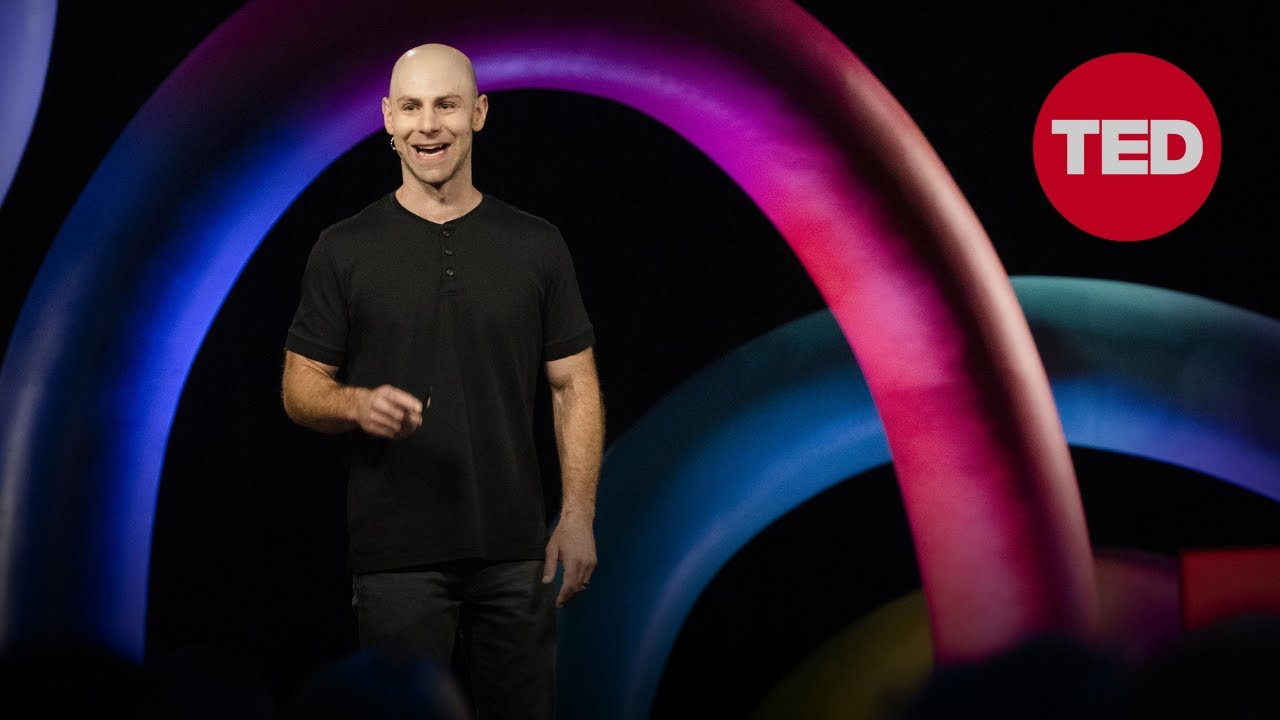
Title: How to stop languishing and start finding flow (如何停止精神内耗并进入心流状态)
Speaker: Adam Grant
Accent: General American (Articulate, Academic & Rhetorical)
Duration: 15:56 (Excerpt Part 1)
🎧 语音现象标注说明 (Legend)
为了让你更直观地看到发音技巧,我使用以下符号进行标注:
| 符号/格式 | 名称 (中/英) | 发音技巧/说明 |
|---|---|---|
| 加粗 (Bold) | 重读单词 (Sentence Stress) |
发音需更响亮、更长。 |
| 斜体 (Italics) | 弱读单词 (Weak forms) |
发音要轻、快,元音常弱化为**/ə/**。 (通常涉及介词、代词) |
| ‿ | 连读 (Linking) |
前一个词的词尾与后一个词的词头滑过,声音不断开。 |
| (t) / (d) / (p) | 失爆 / 不完全爆破 (Stop sounds) |
只做口型不发声,或停顿一下,不将气流送出。 |
| /d/ | 浊化 (Flap T) |
当字母t夹在两个元音之间时,发音类似快速的 d。 |
| // | 意群停顿 (Pause) |
在此处稍微换气或做短暂亦停顿。 |
📜 语音现象标注全文 (Annotated Transcript)
(Legend Review: Bold=Stress; Italics**=Weak forms; ‿=Link; (t)/(d)=Stop; /d/=Flap T; //=Pause)**
At the beginning ‿ of the pandemic, // I hit ‿ a wall.
One day // I woke up // and deci(d)ed // that I didn't want to get out ‿ of bed.
(out of t 浊化)
I love my job, // but I couldn't summon the will // to do ‿ it.
I started doomscrolling // late into the night.
Reading news stories // that aren't even news stories.
Like, // "Man Forgets Keycode // to Bitcoin Wallet, // Has Two Tries Left // to ‿ access // Two Hundred ‿ and Twenty Million Dollars."
Then I played // Words with Friends // for seven hours.
I wasn't burned out. // I had energy.
I wasn't depressed. // I didn't feel hopeless.
I just felt // a little bit // aimless // and joyless.
(little bit 这里的 tt 浊化; bit t 失爆)
If you felt the same way, // you are not ‿ alone.
It turns out // there's ‿ a name for that feeling. // It's called // "languishing."
Languishing // is ‿ a sense ‿ of stagnation // and emptiness.
(sense of s 与 o 连读 /sen-səv/)
It feels // like you're muddling through your days, // looking at your life // through ‿ a foggy windshield.
(muddling 这里的 dd 浊化)
It's the mental health // equivalent // of "meh".
Now, // languishing // is not just in your head. // It's in your body, too.
You can see it // in your pulse.
People who are languishing // are more likely // to suffer from heart ‿ attacks.
But why // do we languish?
Part ‿ of the reason // is that we haven't processed // the trauma // of the pandemic.
But a big part ‿ of it // is also // that we're living // in ‿ a world // that glorifies // business.
(part of it 连读 /pɑːr-tə-vɪt/)
We treat // mental health // as if it's ‿ a binary.
You're either mentally ill // or you're picture-perfectly well.
You're either depressed // or you're happy.
But actually, // mental health // is ‿ a spectrum.
On one end, // you have depression. // That is the valley ‿ of ill-being.
On the other end, // you have flourishing. // That is the peak ‿ of well-being.
(peak of k 和 o 连读)
Flourishing // is not just // not having mental illness.
It's having // ‿ a strong sense ‿ of meaning, // mastery, // and mattering // to others.
Languishing // lives somewhere // in the middle.
It's the neglected middle child // of mental health.
(neglected middle d 失去爆破)
And it matters // because languishing // is ‿ a danger zone.
When you're languishing, // your motivation dips. // Your focus scrambles.
You are three times more likely // to cut back on work.
So, // what can we do ‿ about it?
How do we find // a way // from languishing // to flourishing?
The antidote // to languishing // is flow.
Flow // is that state // of total ‿ absorption // in ‿ an ‿ activi(t)y.
It's when you lose track ‿ of time. // And your sense ‿ of self // vanishes.
(track of k 和 o 连读; sense of self s 连读)
You know that feeling // when you're cooking, // or running, // or gardening, // and suddenly // three hours have passed // and it felt like twenty minutes?
That's flow.
Early in the pandemic, // the best predictor // of well-being // wasn't optimism. // It wasn't mindfulness.
It was flow.
People // who became more ‿ immersed // in their projects // managed to ‿ avoid languishing // and maintained // their pre-pandemic happiness.
So, // how do we find flow // in our daily lives?
It doesn't have to be // ‿ a major project.
We can find flow // in small moments ‿ of mastery.
Mastery // is just the sense // that you are getting better // at something.
And that matters // because languishing // is stagnation. // It is the absence ‿ of progress.
Small wins // are the antidote.
For my family, // we found mastery // in Mario Kart.
We started playing // every single day.
And gradually, // we got better. // We mastered // the Rainbow Road.
And that feeling // of small progress // gave us ‿ a sense ‿ of momentum.
(gave us v 和 u 连读)
So, // mastery // is one path to flow.
But there is ‿ a barrier // that stands in our way.
And that barrier // is fragmentation**.
We live // in ‿ a world ‿ of constant // ‿ interruptions.
You sit down to work, // and ping! // ‿ A text message.
You try to read, // and buzz! // ‿ An email.
You try to have ‿ a conversation**, //** and **** ding**! // ‿** A **** no****tification**.
Brigid Schulte // calls this // "time confetti".
We take // what could be // meaningful blocks ‿ of time, // and we slice them up // into tiny // useless bits.
(blocks of time s, o, f 连读; slice them up 连读)
Fragmentation // is the enemy ‿ of flow.
To find flow, // we need boundaries.
We need to carve out // uninterrup(t)ed time.
(carve out v 和 o 连读)
Think ‿ about it. // When was the last time // you had // ‿ a conversation // with no phones in sight?
When was the last time // you worked on ‿ a task // with no ‿ email check?
(worked on k 和 o 连读)
We need to treat // uninterrup(t)ed blocks ‿ of time // as treasures // to guard.
In my workplace, // we tried ‿ an ‿ experiment.
We set quiet time // policies.
No ‿ interruptions // on Tuesday mornings, // Thursday afternoons, // and Friday mornings.
And guess what?
Productivi(t)y went up. // Errors went down. // And stress levels // plumme(t)ed.
(stress levels s 和 l 连读)
People finally had // the space // to find flow.
So, // if you are feeling // blah, // or meh, // or languishing, // don't just wait // for happiness to return.
Actively seek out flow.
(seek out k 和 o 连读)
Start small.
Focus on something // mundane.
Solve ‿ a crossword puzzle. // Play ‿ a game. // Cook ‿ a meal.
Give yourself // the gift // of uninterrup(t)ed // attention.
Flow // isn't just // a peak ‿ experience.
It is also // ‿ a cure // for the stagnation ‿ of languishing.
By finding flow // in tiny moments, // we build the momentum // to move // from emptiness // to engagement.
From stagnation // to progress.
And ultimately, // from languishing // to flourishing.
Thank you.
💡 高级词汇与地道表达 (Vocabulary & Expressions)
| 词汇/表达 | 词性 & 音标 | 释义 (English definition) |
例句 & 搭配 |
|---|---|---|---|
| Languishing | [n./v.] /ˈlæŋ.ɡwɪ.ʃɪŋ/ | a state of feeling stagnant, empty, and unfocused; lacking vitality | *Example:*Languishing is the neglected middle child of mental health. |
| Flow | [n.] /floʊ/ | a psychological state of being completely absorbed in an activity (the zone) | *Example:*Musicians often experience flow during a performance. |
| Mastery | [n.] /ˈmæs.tɚ.i/ | comprehensive knowledge or skill in a subject or activity | *Example:*Small wins give us a sense of mastery. |
| Stagnation | [n.] /stæɡˈneɪ.ʃən/ | the state of not flowing or moving; lack of activity or progress | *Example:*Economic stagnation can lead to unemployment. |
| Momentum | [n.] /moʊˈmen.t̬əm/ | the impetus gained by a moving object; the ability to keep increasing or developing | *Example:*We need to build momentum to finish the project. |
| Fragmentation | [n.] /ˌfræɡ.menˈteɪ.ʃən/ | the process or state of breaking or being broken into small or separate parts | *Example:*The fragmentation of our attention spans is a modern problem. |
| Time Confetti | [idiom] | small, scattered bits of time created by constant interruptions | *Example:*Instead of deep work, we are left with time confetti. |
| Mundane | [adj.] /mʌnˈdeɪn/ | lacking interest or excitement; dull; earthly | *Example:*Even mundane tasks like washing dishes can induce flow. |
| Carve out | [phrasal verb] | to take something (like time or space) from a larger whole, often with effort | *Example:*I try to carve out an hour every morning for reading. |
| Plummet | [v.] /ˈplʌm.ɪt/ | fall or drop straight down at high speed; decrease rapidly | *Example:*Stock prices plummeted after the news. |
🗣️ 练习建议 (Tips)
- Rhetorical Questions & Answers (修辞问答):
- Adam Grant 经常使用自问自答的技巧,例如 "So, how do we find flow? ... It doesn't have to be..."。
- 技巧: 读问题时语调上扬(Rising Intonation),读出好奇感;读答案时语调下沉(Falling Intonation),表现出确定性和权威感。
- Sound Effects Words (拟声词的处理):
- 在描述干扰时,他用了 "Ping!", "Buzz!", "Ding!"。
- 技巧: 这些词要读得短促、清脆、稍微高频,模仿机器发出的恼人声音,与后面低沉的 "A text message" 形成鲜明对比,突显出被打断的无奈。
- Metaphor Emphasis (隐喻的强调):
- "Time Confetti" 是一个非常生动的隐喻。
- 技巧: 在读 "confetti" 时,可以稍微放慢语速,清晰地发每一个音节,仿佛你能看到时间像纸屑一样飘散。
- Contrast Pairs (对比词组):
- 注意结尾的排比对比:"From emptiness to engagement*", "From stagnation to progress*", "From languishing to flourishing*"*。
- 技巧: 重读每一组的两个名词,并且每一组的语调逐渐加强,形成层层递进的气势。