
📺 视频信息
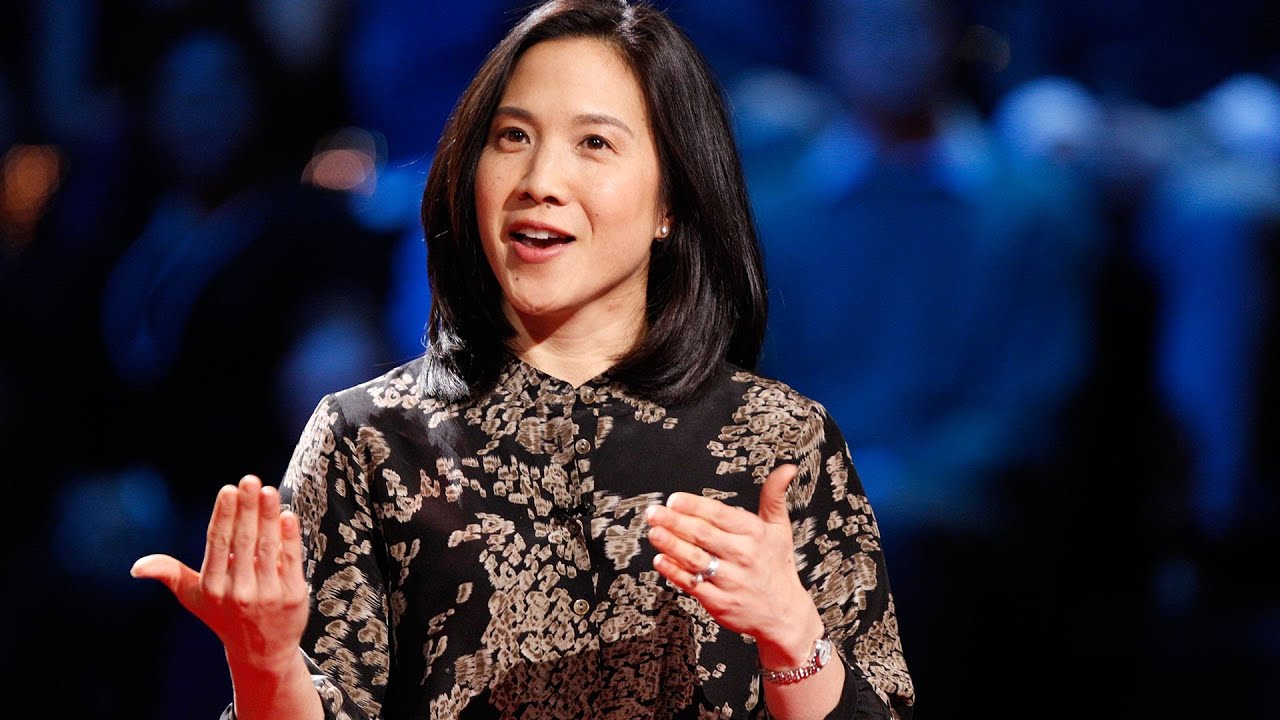
Title: Grit: The Power of Passion and Perseverance (坚毅:激情与坚持的力量)
Speaker: Angela Lee Duckworth
Accent: General American
Duration: 06:12
🎧 语音现象标注说明 (Legend)
为了让你更直观地看到发音技巧,我使用以下符号进行标注:
| 符号/格式 | 名称 (中/英) | 发音技巧/说明 |
|---|---|---|
| 加粗 (Bold) | 重读单词 (Sentence Stress) |
发音需更响亮、更长。 |
| 斜体 (Italics) | 弱读单词 (Weak forms) |
发音要轻、快,元音常弱化为**/ə/**。 (通常涉及介词、代词) |
| ‿ | 连读 (Linking) |
前一个词的词尾与后一个词的词头滑过,声音不断开。 |
| (t) / (d) / (p) | 失爆 / 不完全爆破 (Stop sounds) |
只做口型不发声,或停顿一下,不将气流送出。 |
| /d/ | 浊化 (Flap T) |
当字母t夹在两个元音之间时,发音类似快速的 d。 |
| // | 意群停顿 (Pause) |
在此处稍微换气或做短暂亦停顿。 |
📜 语音现象标注全文 (Annotated Transcript)
(Legend Review: Bold=Stress; Italics**=Weak forms; ‿=Link; (t)/(d)=Stop; /d/=Flap T; //=Pause)**
When I was twenty-seven years ‿ old, // I left ‿ a very demanding job // in management consulting, // for ‿ a job // that was even more demanding: // teaching.
(demanding job in 这里的 b 和 i 连读; that was 弱读)
I went to teach seventh graders // math // in the New York City Public Schools.
And like any teacher, // I made quizzes ‿ and tests. // I gave out homework ‿ assignments.
When the work came back, // I calcula(t)ed grades.
What struck me // was that I Q // was not the only difference // between my best // and my worst students.
(best and t失爆; worst students t失爆)
Some ‿ of my strongest performers // did not have // stratospheric I Q scores.
And some ‿ of my smartest kids // weren't doing so well.
And that got me thinking.
The kinds ‿ of things // you need to learn // in seventh grade math, // sure, // they're hard: // ratios, // decimals, // the area ‿ of ‿ a parallelogram.
(area of a 连读 /e-ri-ə-və/; parallelogram 重音在 lel)
But these concepts // are not impossible.
And I was firmly convinced // that every one ‿ of my students // could learn the material // if they worked hard // and long ‿ enough.
(could learn d 失爆; long enough 连读)
After several more years ‿ of teaching, // I came to the conclusion // that what we need in ‿ education // is ‿ a much better ‿ understanding // of students ‿ and learning // from ‿ a motivational perspective, // from ‿ a psychological perspective.
(better d/t 浊化; students and ts 和 a 连读)
In ‿ education, // the one thing // we know how to measure best // is I Q.
But what ‿ if doing well // in school // and in life // depends on // much more // than your ‿ abili(t)y // to learn quickly // and easily?
So I left the classroom, // and I went to graduate school // to become ‿ a psychologist.
I started studying kids ‿ and ‿ adults // in all kinds ‿ of // super challenging settings, // and in every study // my question was, // who is successful here // and why?
My research team ‿ and I // went to West Point Mili(t)ary ‿ Academy.
We tried to predict // which cadets // would stay in mili(t)ary training // and which would drop out.
(military 这里的 t 也可以弱化甚至省略 /mɪ-lɪ-te-ri/)
We went to the National Spelling Bee // and tried to predict // which children // would ‿ advance farthest // in competition.
We studied rookie teachers // working in really tough neighborhoods, // asking // which teachers // are still gonna be here // in teaching // by the end ‿ of the school year, // and of those, // who will be the most ‿ effective // at improving learning outcomes // for their students?
We partnered // with priva(t)e companies, // asking, // which ‿ of these sales people // is gonna keep their jobs? // And who's gonna earn the most money?
In all those very different contexts, // one characteristic // emerged // as ‿ a significant predictor // of success.
And it wasn't social ‿ intelligence. // It wasn't good looks, // physical health, // and it wasn't I Q.
It was grit.
Grit is passion // and perseverance // for very long-term goals.
Grit is having stamina.
Grit is sticking // with your future, // day in, // day out, // not just for the week, // not just for the month, // but for years, // and working really hard // to make that future // a reali(t)y.
Grit is living life // like it's ‿ a marathon, // not ‿ a sprint.
(Legend Review: Bold=Stress; Italics**=Weak forms; ‿=Link; (t)/(d)=Stop; /d/=Flap T; //=Pause)**
A few years ‿ ago, // I started studying grit // in the Chicago Public Schools.
I asked thousands ‿ of high school juniors // to take grit questionnaires, // and then waited ‿ around // more than ‿ a year // to see who would graduate.
Turns out // that grittier kids // were significantly more likely // to graduate, // even when I matched them // on every characteristic // I could measure, // things like family income, // standardized ‿ achievement test scores, // even how safe kids felt // when they were at school.
(turns out 这里的 s 和 o 连读; standardized achievement d 和 a 连读)
So it's not just at West Point // or the National Spelling Bee // that grit matters.
It's also in school, // espe*cially for kids at risk // for dropping out.
To me, // the most shocking thing ‿ about grit // is how little we know, // how little science knows, // about building ‿ it.
(building it ng 和 i 连读)
Every day, // parents ‿ and teachers ask me, // "How do I build grit in kids? // What do I do // to teach kids ‿ a solid work ethic? // How do I keep them motivated // for the long run?"
(solid work d 失爆; work ethic k 和 e 连读)
The honest answer is, // I don't know.
(don't know t 失爆, n 和 k 同化)
What I do know // is that talent // doesn't make you gritty.
Our data show very clearly // that there are many talen(t)ed ‿ individuals // who simply do not // follow through // on their commitments.
(talented individuals d 和 i 连读)
In fact, // in our data, // grit is usually // unrelated // or even inversely related // to measures ‿ of talent.
So far, // the best ‿ idea // I've heard ‿ about building grit in kids // is something called // "growth mindset."
(best idea t 和 i 连读; heard about d 和 a 连读)
This is an ‿ idea // developed at Stanford ‿ Universi(t)y // by Carol Dweck, // and it is the belief // that the ‿ abili(t)y to learn // is not fixed, // that it can change // with your ‿ effort.
Dr. Dweck has shown // that when kids read ‿ and learn ‿ about the brain // and how it changes ‿ and grows // in response to challenge, // they're much more likely to persevere // when they fail, // because // they don't believe // that failure // is ‿ a permanent condition.
So growth mindset // is ‿ a great ‿ idea // for building grit.
But we need more.
And that's where I'm gonna end my remarks, // because that's where we are.
That's the work // that stands before us.
We need to take our best ‿ ideas, // our strongest ‿ intuitions, // and we need to test them.
(intuitions n 和 s 之间有 /t/ 的感觉)
We need to measure // whether we've been successful, // and we have to be willing to fail, // to be wrong, // to start over ‿ again // with lessons learned.
In other words, // we need to be gritty // about getting our kids grittier.
(getting t 浊化)
Thank you.
💡 高级词汇与地道表达 (Vocabulary & Expressions)
| 词汇/表达 | 词性 & 音标 | 释义 (English definition) |
例句 & 搭配 |
|---|---|---|---|
| Grit | [n.] /ɡrɪt/ | courage and resolve; strength of character (Also: small loose particles of stone/sand) |
*Example:*It takes true grit to stand up to a bully. **搭配:**show grit; true grit. |
| Stamina | [n.] /ˈstæm.ə.nə/ | the ability to sustain prolonged physical or mental effort | *Example:*Marathon runners need a lot of stamina. |
| Stratospheric | [adj.] /ˌstræt̬.əˈsfer.ɪk/ | extremely high (literally relating to the stratosphere) |
*Example:*Her IQ scores were stratospheric. **搭配:**stratospheric prices; stratospheric success. |
| Parallelogram | [n.] /ˌper.əˈlel.ə.ɡræm/ | a four-sided plane rectilinear figure with opposite sides parallel | *Example:*Calculate the area of a parallelogram. |
| Rookie | [n./adj.] /ˈrʊk.i/ | a beginner or novice; a new recruit | *Example:*Rookie teachers often face the toughest challenges. **搭配:**rookie mistake; rookie cop. |
| Work ethic | [n. phr.] /ˈwɝːk ˌeθ.ɪk/ | the principle that hard work is intrinsically virtuous or worthy of reward | *Example:*She has a solid work ethic and never misses a deadline. |
| Follow through | [phrasal verb] | to continue an action or task to its conclusion | *Example:*Many people have ideas but fail to follow through. **搭配:**follow through on commitments. |
| Inversely | [adv.] /ɪnˈvɝːs.li/ | in the opposite manner, position, or order | *Example:*Grit is sometimes inversely related to talent. |
| Growth mindset | [n. phr.] | the belief that abilities can be developed through dedication and hard work | *Example:*Developing a growth mindset helps kids accept failure as learning. |
| Persevere | [v.] /ˌpɝː.səˈvɪr/ | to continue in a course of action even in the face of difficulty | *Example:*Despite the injury, he persevered to finish the race. |
| Intuition | [n.] /ˌɪn.tuːˈɪʃ.ən/ | the ability to understand something immediately, without the need for conscious reasoning | *Example:*We need to test our strongest intuitions with data. |
🗣️ 练习建议 (Tips)
- Stop Sounds & Nasal Plosion (失爆与鼻腔爆破):
- 在 "don't know" 中,t 不发音,n 稍微延长或直接过渡到下一个 n/k 音。
- 在 "solid work" 中,d 失去爆破,只做口型,声音停顿。
- Linking (连读):
- 注意元音之间的连读,如 "Start over again" -> Star-to-ver-ra-gain (注意 over 里的 r 会复活)。
- 注意 "Standardized achievement" -> Standardize-da-chievement。
- Intonation & Emotion (语调与情感):
- Angela 在演讲中非常真诚。当她说 "The honest answer is, I don't know." 时,有一个很明显的停顿和降调,表现出一种坦诚和科学家的严谨,模仿这种语气能增加口语的感染力。
- 在最后一句 "We need to be gritty about getting our kids grittier." 中,重读两个 gritty/grittier,这是演讲的 Punchline (点睛之笔),要有力量。