
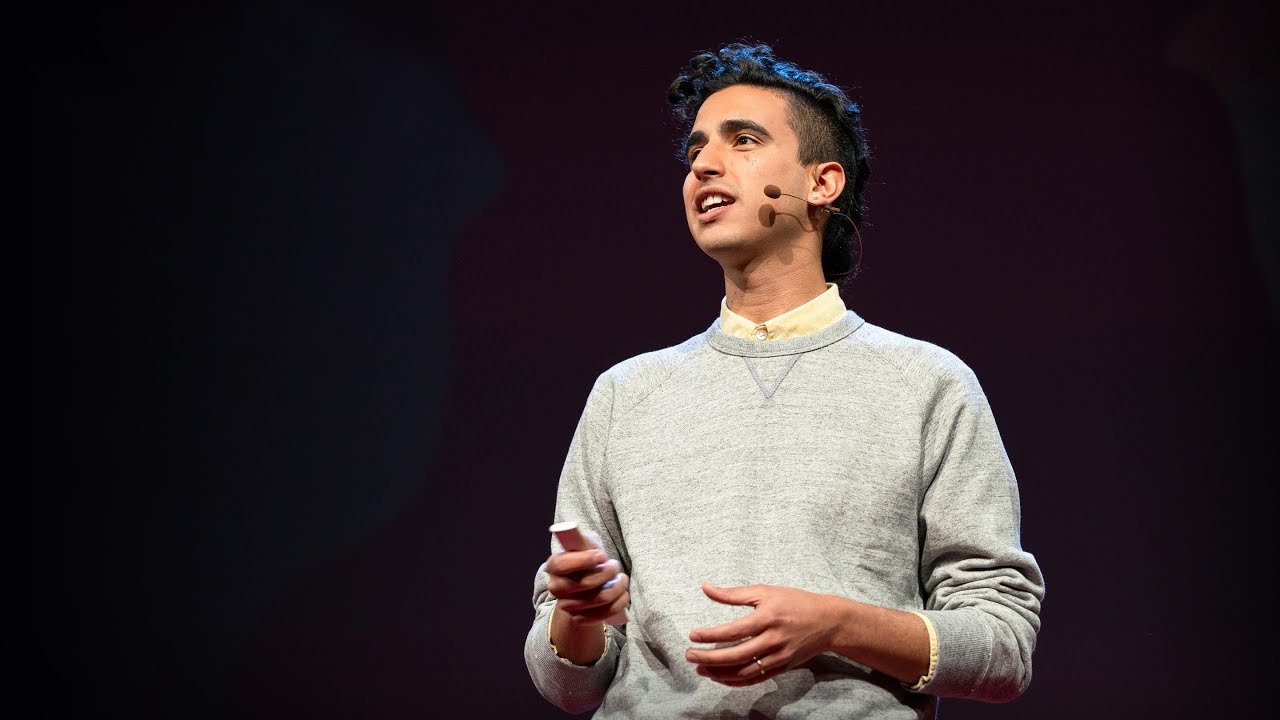

📺 视频信息
Title: Empathy Is Not Endorsement
Speaker: Dylan Marron
Accent: General American (East Coast / New York influence)
Duration: 10:52
🎧 语音现象标注说明 (Legend)
为了让你更直观地看到发音技巧,我使用以下符号进行标注:
| 符号/格式 | 名称 (中/英) | 发音技巧/说明 |
|---|---|---|
| 加粗 (Bold) | 重读单词 (Sentence Stress) |
发音需更响亮、更长。 |
| 斜体 (Italics) | 弱读单词 (Weak forms) |
发音要轻、快,元音常弱化为 /ə/ 。 (通常涉及介词、代词) |
| ‿ | 连读 (Linking) |
前一个词的词尾与后一个词的词头滑过,声音不断开。 |
| (t) / (d) / (p) | 失爆 / 不完全爆破 (Stop sounds) |
只做口型不发声,或停顿一下,不将气流送出。 |
| /d/ | 浊化 (Flap T) |
当字母t 夹在两个元音之间时,发音类似快速的 d。 |
| // | 意群停顿 (Pause) |
在此处稍微换气或做短暂亦停顿。 |
📜 语音现象标注全文 (Annotated Transcript)
(Legend Review: Bold=Stress; Italics =Weak forms; ‿=Link; (t)/(d)=Stop; /d/=Flap T; //=Pause)
Hi. // Um, // I've received hate ‿ online.
(hate online: t 弱化与 o 连读)
A lot ‿ of ‿ it. // And it comes // with the territory ‿ of my work.
(lot of it: 连读非常紧密 /lɑ-də-vɪt/)
I'm ‿ a digi/d/al creator. // I make things // specifically // for the internet.
(digital: t 浊化为 d)
Like // a few years ‿ ago // I made ‿ a video series // called Every Single Word // where I edi/d/ed down // popular films // to only the words spoken // by people ‿ of color, // as ‿ a way // to empirically // and ‿ accessibly talk // about the issue ‿ of ‿ representation // in Hollywood.
(edited: t 浊化; as a way: 连读)
Then, // la/d/er // as trans-phobic bathroom bills // star/d/ed gaining media ‿ attention // around the Uni/d/ed States, // I hosted // and produced ‿ an interview series // called Sitting ‿ in Bathrooms // with Trans People, // where I did ‿ exactly that.
(United: t 浊化; Sitting in: 连读)
And then // are you familiar // with those // unboxing videos ‿ on YouTube // where YouTubers // open ‿ up the latest // electronic gadgets?
(open up: 连读)
Great. // So I satirized those // in ‿ a weekly series // where ‿ instead, // I unboxed // intangible // ideologies, // like police brutality, // masculinity // and the mis-treatment ‿ of Native ‿ Americans.
(Native Americans: v 和 A 连读)
Um, my work // became popular. // Very popular.
I got millions ‿ of views, // a ton ‿ of great press // and ‿ a slew ‿ of new followers, // but the flip side // of success ‿ on the internet // is internet hate.
(millions of: s 和 o 连读; ton of: n 和 o 连读)
I was called everything. // From be/d/a // to snowflake // and of course, // the ever popular // "cuck."
(beta: t 浊化)
Don't worry, // I will break these terms down ‿ for you.
So be/d/a, // for those ‿ of you unfamiliar, // is short-hand online lingo // for be/d/a male.
But let's be real, // I wear pearl earrings // and my fashion ‿ asthetic // is rich white woman // running errands, // so I'm not angling // to be ‿ an alpha.
(be an alpha: 连读)
Now snowflake // is ‿ a put ‿ down // for people who are sensitive // and believe them selves // to be unique, // and I'm ‿ a millennial // and ‿ an only child, // so // da-da!
(put down: t 失去爆破; I'm a: 连读)
But my favorite, // favorite, // favorite, // is cuck.
It's ‿ a slur, // short for cuckold // for men // who have been chee/d/ed ‿ on // by their wives.
But friends, // I am so gay // that if I had ‿ a wife // I would ‿ incourage her // to cheat ‿ on me.
(cheated on: t 浊化并连读; cheat on: t 连读)
Let's take ‿ a look // at some ‿ of this // negativity // in action.
(look at: k 与 a 连读)
Sometimes it's direct. // Like Marcos // who wrote // "You're everything // I hate // in ‿ a human being."
Thank you Marcos.
Others are more concise. // Like Donovan, // who wrote // "gay-wad fag."
Now I do need ‿ to point ‿ out, // Donovan is not wrong, // okay?
(need to: d 失去爆破; point out: t 与 out 连读)
In fact // he's right ‿ on both counts, // so credit // where credit is due.
Thank you Donovan.
(right on: t 连读)
Others write ‿ to me // with questions. // Like Brian // who asked // "Were you born ‿ a bitch // or did you just learn // to be one // over time?"
(born a: n 与 a 连读)
But my favorite thing // about this // is that once Brian // was done typing, // his finger must have slipped // because then he sent me // the thumbs ‿ up ‿ emoji.
(thumbs up emoji: s-u-p-e 连读)
So babe, // thumbs ‿ up // to you too.
It's fun // to talk ‿ about these messages now, // right?
And it's cathartic // to laugh ‿ at them.
But I can tell you // that it really does not // feel good // to receive them.
(talk about: k 与 a 连读; laugh at: f 与 a 连读)
At first, // I would screen-shot their comments // and make fun // of their typos, // but this soon felt ‿ elitist // and ultimately // unhelpful.
(felt elitist: t 与 e 连读)
So // over time, // I developed // an ‿ unexpected // coping mechanism.
Because most ‿ of these messages // I received // were through social media // I could often click // on the profile picture // of the person who sent them // and learn everything // about them.
(most of: t 失去爆破)
I could see pictures // they were tagged ‿ in // posts they'd wri/t/en // memes they'd shared.
(tagged in: d 与 i 连读)
And somehow seeing // that it was ‿ a human // on the other side ‿ of the screen // made me feel // a li/d/le be/d/er.
(was a: z 与 a 连读; side of: d 与 o 连读; little better: t 浊化)
Not to justify // what they wrote, // right?
But just // to provide context.
Still, // that didn't feel // like ‿ enough.
So, // I called some ‿ of them.
Only the ones // I felt safe talking to, // with ‿ a simple // opening question: // "Why // did you write that?"
(simple opening: l 与 o 连读)
The first person I spoke to // was Josh.
He had wri/t/en // to tell me // that I was ‿ a moron, // I was ‿ a reason // this country // was dividing ‿ itself // and, // he added ‿ at the end // that being gay // was ‿ a sin.
(was a: z 与 a 连读; dividing itself: g 与 i 连读; added at: d 与 a 连读)
I was so nervous // for our first conversation.
This wasn't ‿ a comment section.
So I couldn't use tools // like muting // or blocking.
Of course, I guess, // um, // I could have hung ‿ up ‿ on him.
But I didn't want to.
Because I liked talking to him.
Because I liked him.
(hung up on him: 连读 /hʌŋ-gʌ-pɑn-hɪm/)
Here's ‿ a clip // of one ‿ of our conversations.
(Here's a: z 与 a 连读)
Josh, // you said // that you're ‿ a bout // to graduate high school, // right?
Mmm-hmm.
How is high school // for you?
Am I ‿ allowed // to use // the H-E-double-hockey-stick word?
Ohhh yeah. // You're ‿ allowed to.
It was hell!
Really...
And it's still hell // right now // even though // it's only two weeks left.
I'm ‿ a li/d/le bit bigger - // I don't like // to use the word "fat" - // but I am ‿ a li/d/le bit bigger // than ‿ a lot ‿ of my classmates // and they seem // to judge me // before they even got // to know me.
That's awful.
I mean, // I also just want // to let you know Josh, // I was bullied // in high school, // too.
(you're a: 连读; I a: 连读; I'm a: 连读; am a: 连读; than a: 连读)
So, // did our common ground // of being bullied ‿ in high school // erase // what he wrote me?
No.
And // did our single phone conversation // radically heal // a politically divided country // and cure // systemic ‿ injustice?
No. // Absolutely not, // right?
(bullied in: d 与 i 连读; systemic injustice: c 与 i 连读)
But, // did our conversation // humanize ‿ us // to each other // more than profile pictures // and posts // ever could?
Absolutely.
(humanize us: z 与 u 连读)
I didn't stop there.
Because some ‿ of the hate // I received // was from my side.
So when Matthew, // a queer, // liberal artist // like me, // publicly wrote // that I represented // some ‿ of the worst // aspects ‿ of liberalism, // I wan/d/ed // to ask him this.
(some of: m 与 o 连读; aspects of: s 与 o 连读)
You tagged me // in this post. // Did you want me // to see ‿ it?
I honestly // didn't think // that you would.
Have you ever // been publicly dragged?
I have been. // And I just said, // "no, // I don't care."
And did you not care?
But it was hard!
Did you not care?
Um. // Oh... // well I cared, // yes.
(see it: 连读)
At the end ‿ of these conversations // there's often // a moment ‿ of reflection.
A reconsideration.
And that's ‿ exactly // what happened // at the end ‿ of my call // with ‿ a guy named Doug, // who had wri/t/en // that I was ‿ a talentless // propaganda hack.
(end of: d 与 o 连读; that's exactly: s 与 e 连读; with a: th 与 a 连读; was a: z 与 a 连读)
Did the conversation // we just had- // does it, // like, // make you feel differently // about how you write ‿ online?
Yeah.
You know, // when I said this to you- // when I said // that you were ‿ a "talentless hack" // I had never // conversed with you // in my life, // really.
I didn't really // know anything // really ‿ about you.
And I think // that ‿ a lot ‿ of times // that's // what the comment sections // really are...
it's really ‿ a way // to get your anger // at the world // out // on random // profiles ‿ of strangers, // pre/d/y much.
Yeah.
But it definitely // has made me // re-think // the way // that I // interact // with people ‿ online.
(write online: t 与 o 连读; were a: r 与 a 连读; that a: t 浊化并连读; really a: y 与 a 连读; profiles of: z 与 o 连读)
So I've collected // these conversations // and many others // for my podcast, // Conversations // with People // Who Hate Me.
Be fore I star/d/ed this project, // I thought // that the real way // to bring ‿ about change // was to shut down // opposing viewpoints // through epically worded // video essays // and comments // and posts, // but I soon learned // those were only // cheered ‿ on // by the people // who already ‿ agreed // with me.
(bring about: 连读; cheered on: d 与 o 连读; already agreed: y 与 a 连读)
Sometimes // bless you. // Sometimes, // the most // subversive thing // you could do, // -- yeah, clap for him. -- // Sometimes the most // subversive thing // you could do // was to actually // speak with // the people // you disagreed with // and not // simply at them.
Now in every one // of my calls, // I always ask // my guests // to tell me // about them selves.
And it's their answer // to this question // that ‿ allows me // to empathize // with them.
(that allows: t 浊化并连读)
And empathy, // it turns ‿ out, // is ‿ a key ‿ ingredient // in ge/d/ing these conversations // off the ground, // but it can feel // very volnerable // to be empathizing // with someone // you profoundly // disagree with.
(turns out: z 与 o 连读; is a: z 与 a 连读; key ingredient: y 与 i 连读; getting: t 浊化)
So I ‿ established // a helpful mantra // for myself.
Empathy // is not // endorsement.
(I established: y 与 e 连读)
Empathizing // with someone // you profoundly // disagree with // does not // suddenly // compromise // your own // deeply held beliefs // and ‿ endorse theirs.
(and endorse: d 与 e 连读)
Empathizing // with someone // who, // for ‿ example, // believes // that being gay // is ‿ a sin // doesn't mean // that I'm suddenly // gonna drop // everything, // pack my bags, // and grab my one-way ticket // to hell, // right?
(for example: r 与 e 连读; is a: z 与 a 连读)
It just means // that I'm ‿ acknowledging // the humanity // of someone // who was raised // to think // very differently // from me.
(I'm acknowledging: m 与 a 连读)
I also want // to be super clear // about something.
This // is not // a prescription // for activism**, // right?
I ‿ understand // that some people // don't feel safe // talking // to their detractors // and others // feel so marginalized // that they justifiably // don't feel // that they have // any empathy // to give.
I totally get that.
This is just // what I // feel well sui/d/ed // to do.
(I understand: y 与 u 连读)
You know I've // reached ‿ out // to ‿ a lot ‿ of people // for this podcast.
And some // have politely declined, // others have read my message // and ‿ ignored ‿ it, // some // have blocked me // automatically // when I sent the ‿ invitation, // and one guy // actually ‿ agreed // to do ‿ it // and then // five minutes // into the call // hung ‿ up ‿ on me.
(reached out: d 与 out 连读; to a lot of: 连读; and ignored it: 连读; the invitation: 连读; actually agreed: y 与 a 连读; do it: 连读; hung up on: 连读)
I'm also ‿ aware // that this talk // will ‿ appear // on the internet.
And with the internet // comes comment sections // and with comment sections // inevitably // comes hate.
(also aware: 连读; will appear: 连读)
So as you are watching // this talk, // you can feel free // to call me // whatever you'd like.
You can call me // a gay-wad, // a snowflake, // a cuck, // a be/d/a, // or everything wrong // with liberalism.
But just know, // that if you do, // I may ask you // to talk.
And if you refuse // or block me // automatically, // or ‿ agree // and hang ‿ up ‿ on me, // then maybe babe, // the snowflake // is you.
Thank you // so much.
💡 高级词汇与地道表达 (Vocabulary & Expressions)
| 词汇/表达 | 词性 & 音标 | 释义 (English definition) | 例句 & 搭配 |
|---|---|---|---|
| Satirize | [v.] /ˈsæt.ə.raɪz/ | to use satire (humor, irony) to criticize someone/something | Example: He satirized unboxing videos to discuss serious issues. 搭配: satirize society / politics |
| Intangible | [adj.] /ɪnˈtæn.dʒə.bəl/ | impossible to touch, describe exactly, or give a precise value to | Example: He unboxed intangible ideologies like masculinity. 搭配: intangible assets / benefits |
| Beta | [n.] /ˈbeɪ.tə/ | (Slang) A man perceived as passive, subservient, or lacking dominance | Example: The internet trolls called him a "beta male". 搭配: beta male |
| Snowflake | [n.] /ˈsnoʊ.fleɪk/ | (Slang) A derogatory term for someone deemed overly sensitive or easily offended | Example: They called him a snowflake because he cared about social justice. 搭配: generation snowflake |
| Cuck | [n.] /kʌk/ | (Slang/Vulgar) Short for cuckold; used by alt-right to insult men seen as weak | Example: "Cuck" is a common slur in certain online communities. |
| Cathartic | [adj.] /kəˈθɑːr.tɪk/ | providing psychological relief through the open expression of strong emotions | Example: It was cathartic to laugh at the hate mail. 搭配: a cathartic experience |
| Elitist | [adj.] /iˈliː.tɪst/ | favoring a select group; snobbish | Example: Correcting their typos felt elitist and unhelpful. 搭配: elitist attitude |
| Dragged | [v.] /drægd/ | (Slang) To be criticized harshly or publicly humiliated (usually online) | Example: Have you ever been publicly dragged on Twitter? 搭配: drag someone |
| Subversive | [adj.] /səbˈvɝː.sɪv/ | intended to undermine or overthrow an established system or institution | Example: Talking to your enemies can be a subversive act. 搭配: subversive ideas / art |
| Detractors | [n.] /dɪˈtræk.tɚz/ | a person who disparages or criticizes someone or something | Example: He decided to call his detractors to understand them. 搭配: ignore the detractors |
| Marginalized | [adj.] /ˈmɑːr.dʒɪ.nəl.aɪzd/ | treated as insignificant or peripheral | Example: Marginalized groups often face systemic injustice. 搭配: marginalized communities |
| Credit where credit is due | [Idiom] | an expression acknowledging a person's contribution or ability | Example: He was rude, but he was right. Credit where credit is due. |
| Come with the territory | [Idiom] | to be an expected result or condition of a situation | Example: Internet hate comes with the territory of being a digital creator. |
🗣️ 练习建议 (Tips)
- Stop Sounds (t/d/p) : Dylan Marron 的语速适中,但他非常喜欢在强调某些词时稍微停顿,而在连贯表达时使用连读。注意 just not, did not, great press 等短语中的失爆现象,不要把每一个尾音 t/d 都发出来。
- Weak Forms (弱读) : 注意功能词 of, to, and, that, was 的弱读。例如 some of 读作 /sʌm ə/, was a 读作 /wəz ə/。这能让你的口语更有节奏感。
- Flap T (浊化) : 作为典型的美式发音,Dylan 将很多单词中间的 t 浊化为 /d/,例如 better, written, getting, digital。掌握这个技巧能让你的美音瞬间地道。
- Tone & Pacing (语调与节奏) : Dylan 的演讲风格非常具有“讲故事”的特性 (Storytelling)。他在模仿 hateful messages 时会改变音色,而在讲道理 (Empathy is not endorsement) 时会放慢语速,加重重读。练习时请模仿他的这种情绪转换。
- Humor (幽默感) : 演讲中包含大量讽刺和自嘲 (Self-deprecation)。在练习 "thumb up to you too" 或 "maybe babe, the snowflake is you" 时,试着带上一点俏皮和讽刺的语气。